
Please Choose Your Language
Views: 0 Author: Site Editor Publish Time: 2026-05-21 Origin: Site
Parenting young children brings a constant dual challenge. You want daily activities promoting crucial developmental milestones. Babies need engaging tummy time. Toddlers need vigorous gross motor engagement. Simultaneously, you desperately need safe activities buying you 10 to 15 minutes of independent play time. A piano mat serves this exact function perfectly. Traditional miniature keyboards require sitting still and precise fine motor control. Formal music lessons are completely inappropriate for children under four. Floor mats offer a highly active alternative. They combine physical movement and musical exploration. They engage toddlers seamlessly without demanding rigid focus. This guide breaks down the essential safety standards. We will evaluate functional requirements and age-appropriate features thoroughly. You will learn exactly how to evaluate the current market. We aim to help you select the right music piano mat for toddlers to maximize both joy and developmental value.
Safety First: Non-toxic materials (ASTM/EN71) and strict volume control (under 85dB) are non-negotiable evaluation criteria.
Function Over Flash: A high-quality kids piano mat must feature polyphony (multiple notes playing at once), responsive action, and an auto power-off function to preserve battery life.
Developmental ROI: These mats support "embodied music cognition" and "discovery learning," proving more effective for ages 0–4 than forced structured musical instruction.
Surface Sensitivity: Implementation requires hard, flat surfaces; plush carpets interfere with the sensor responsiveness of a step piano mat.
Let us explore why floor keyboards succeed where traditional toys fail. The primary driver is a concept called "embodied music cognition." This concept involves combining visual cues, auditory feedback, and tactile actions. Children step or kick to generate sound. Engaging multiple senses simultaneously increases a child's overall attention span. Data suggests interactive floor toys extend independent focus significantly. Children often play independently for over 12 minutes. Static toys usually hold their attention for only four minutes. Toddlers naturally respond to full-body movement.
Next, we must consider discovery learning versus formal lessons. Many parents wish to teach music early. However, forced structured early lessons usually cause immense frustration. A toddler lacks the attention span for a rigid piano bench. Instead, a floor surface acts as a powerful discovery tool. It builds intrinsic musical interest organically. Toddlers naturally learn pitch differentiation and basic rhythm. They jump on different keys to hear distinct sounds. This joyful discovery builds a strong foundation. It removes the stress of structured instruction entirely.
Finally, we evaluate the practical utility. Many parents affectionately call these toys a "babysitter" tool. Real-world parent feedback highlights immense daily value. These interactive surfaces actively encourage longer tummy time for infants. The sounds prompt accidental rolling as babies reach forward. For older toddlers, they burn excess indoor energy safely. Best of all, they give parents brief, guilt-free breaks. You finally get ten minutes to drink coffee or answer emails. The developmental return on investment is massive.
To make an optimal choice, you must match the product to your child's exact developmental stage. The market generally splits into two main categories. Understanding these categories prevents buyer's remorse.
These models target the earliest stages of infancy. They feature an overhead arch suspending hanging toys. A kick-activated base sits at the feet.
Infants practice crucial visual tracking. They watch the colorful hanging toys swing above them. They also learn early cause-and-effect principles. Kicking the base directly produces a bright sound. Furthermore, the setup strongly supports neck strength development. Babies lift their heads during tummy time to look at the keys.
As children learn to walk, their needs change entirely. These floor-based models feature an extended length. They include clearly labeled keys and multiple instrument modes.
Toddlers build vital gross motor coordination through jumping and dancing. They develop spatial awareness by navigating the long playing surface. These models also encourage early collaborative play. Multiple children can step on the keys at once. A well-made model grows alongside your child.
Here are the main milestones these distinct categories support:
Visual tracking and head lifting (Months 2–4).
Intentional reaching and grasping (Months 4–6).
Cause-and-effect associations (Months 6–9).
Gross motor jumping and spatial navigation (Years 1–3).
Simple rhythm creation and collaborative play (Years 3–5).
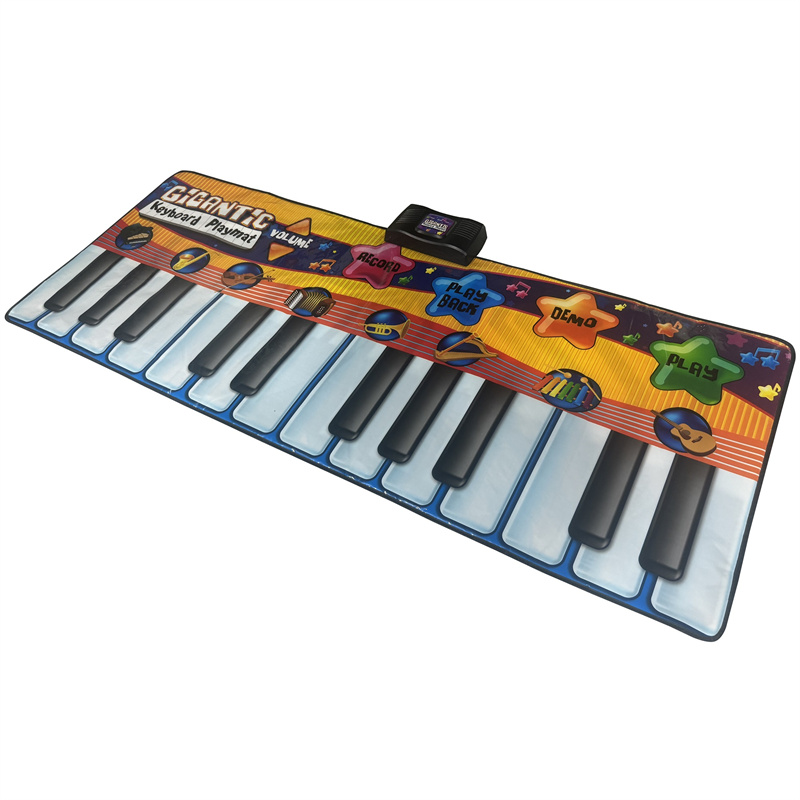
Product quality varies drastically across different brands. You need a reliable framework to evaluate any kids piano mat before purchasing. We will break down the most essential dimensions below.
Children often play directly on the floor. This posture puts their sensitive ears in close proximity to the speaker. Acoustic safety is critically important. The World Health Organization recommends keeping volume below 85dB for young children. A quality product must have an adjustable volume control. It should peak safely below this recommended 85dB limit. Beware of cheap models. Some reset to maximum volume every time you turn them on.
Polyphony defines the ability to process multiple sensor strikes simultaneously. This feature is absolutely vital. Toddlers frequently step on two keys at once. Sometimes they land using both feet. Without polyphony, the electronics simply jam. The device drops notes and frustrates the child. Sensor quality also matters heavily. High-quality sensors register light hand taps from crawling babies. They also handle heavy stomps from older toddlers without noticeable audio lag.
You must choose the right surface material carefully. Heavy-duty vinyl generally outperforms soft fabrics. Vinyl is much easier to wipe down. It resists tearing effectively against hard stepping. Safety compliance is equally critical. Always look for clear ASTM or EN71 non-toxic certifications. These certifications ensure the materials lack harmful phthalates and heavy metals. Furthermore, ensure the product has reinforced stitching. Fully enclosed wiring prevents dangerous shock hazards.
Interactive toys run through batteries remarkably fast. The "Auto Power-Off" function is an absolute necessity. Children rarely remember to switch toys off. Without an automatic shutdown sequence, constant standby mode drains fresh batteries in days.
Evaluation Criteria for Quality Piano Mats | ||
Evaluation Dimension | Poor Quality Indicator | High Quality Standard |
|---|---|---|
Volume Control | Fixed loud volume; resets to max on startup | Adjustable controls; peaks strictly below 85dB |
Sensor Action | Single note only; audio lags behind foot strikes | Full polyphony; instant multi-note chord registration |
Material Safety | Flimsy fabric; exposed internal wiring edges | Heavy-duty vinyl; verified ASTM/EN71 certified |
Power Management | Manual switch only; drains batteries overnight | Auto power-off feature engages after 2 minutes |
Even the best developmental toy fails if set up incorrectly. Understanding implementation realities ensures a completely frustration-free experience. Parents often overlook the physical environment requirements.
Surface selection dictates the entire sensor performance. The ideal setup requires hardwood floors. Firm EVA playmats or tight-weave rugs also work beautifully. Setup risks arise quickly on the wrong flooring type. Placing a large keyboard playmat on plush, deep-pile carpets deadens sensor responsiveness. The soft ground absorbs the physical foot strike. The internal sensor never registers the pressure. Consequently, the child stomps but hears nothing. Additionally, you must avoid stairs or uneven surfaces. Loose surfaces on slippery floors create serious slip hazards. Always consider adding a non-slip rug pad underneath.
Here are the best and worst setup surfaces for optimal sensor performance:
Best Surfaces: Hardwood floors, laminate, firm foam tiles, low-pile area rugs.
Worst Surfaces: Shag carpets, deep-pile rugs, uneven tile grout lines, soft mattresses.
Let us address a very common parental risk. Built-in demo songs often become highly repetitive. You will inevitably hear the same melody dozens of times a day. Evaluate models carefully for their specific mode settings. You want a true "free play" mode. Accidental foot clicks should not trigger a loud, unstoppable demo track. Protect your sanity. Choose a model focusing on individual note creation over pre-recorded loops.
It helps to outline realistic lifecycle expectations. Physical durability may allow the device to last for years. However, your child's interaction style evolves rapidly. At six months, they simply crawl over it. They might pat it randomly. By age two, they intentionally stomp to hear specific animal sounds. By age three, they attempt actual stepping sequences. Understanding this natural evolution helps justify the initial purchase. The toy adapts perfectly as the child grows.
You now possess the knowledge to evaluate the market. The final step involves shortlisting logic. Your child's current age should heavily influence your final decision. Priorities shift significantly as a child grows from infancy to preschool.
Prioritize washability above all else. Babies spit up and drool constantly. You need a surface you can sanitize daily. You also need soft edges to protect sensitive skin. Look for high-contrast colors. Black, white, and red patterns engage developing vision perfectly. These visual cues matter far more than complex musical capabilities.
Prioritize the overall footprint size. Toddlers need ample physical space to jump safely. Durability becomes critical due to relentless heavy stepping. Look for a heavy-duty step piano mat designed to withstand jumping. You also want simple instrument switching. A toddler enjoys hearing a piano suddenly sound like a barking dog or a loud trumpet. Fast feedback keeps them engaged.
Prioritize polyphony and advanced interactive features. Look for record and playback functions. These tools actively encourage creative musical expression. A preschooler wants to hear their own composition. You also need a high number of functional keys. We recommend finding models offering 24 keys or more. A larger keyboard supports actual melody creation rather than just random, disjointed noise.
Choosing the right musical play surface profoundly impacts early playtime. It successfully bridges the gap between high-energy physical activity and foundational musical exposure. You give your child a healthy outlet for their boundless energy. Simultaneously, you subtly introduce them to pitch differentiation and rhythm. This balanced approach creates a highly rewarding environment.
Always look beyond the colorful box art. We highly encourage buyers to prioritize strict volume control. Demand verified safety certifications. Seek out highly responsive sensors. These practical elements matter far more than flashy branding. They matter more than excessive built-in song libraries. A well-chosen model offers years of reliable, engaging, and screen-free discovery. You invest in their developmental growth while securing a few moments of peace for yourself.
A: Yes, they are highly safe when selected carefully. You must choose models featuring non-toxic materials. Look specifically for ASTM or EN71 safety certifications. Ensure the backing utilizes slip-resistant materials to prevent falls. Most importantly, strict volume control is an absolute necessity to protect developing eardrums from loud speaker bursts.
A: The ideal location is a flat, hard surface. Hardwood floors, laminate, or firm EVA playmats provide the best foundation. You must avoid plush or deep-pile carpets. Soft surfaces absorb foot strikes, causing severe sensor inaccuracy. Always ensure the surrounding area is free of sharp corners or tripping hazards.
A: It cannot replace formal technique training. However, it serves a different, crucial purpose. It is a powerful tool for discovery learning and sensory play. Forced lessons before age four often cause frustration. Floor mats build essential intrinsic interest, rhythm, and pitch awareness needed for future successful piano lessons.
A: There is no strict age limit. Infants use kick-play models to develop visual tracking and cause-and-effect recognition. By age two, toddlers use them for gross motor development and jumping. High-quality, large-scale mats remain highly engaging for children up to age five or older, supporting collaborative play and simple melody creation.