
Please Choose Your Language
Views: 0 Author: Site Editor Publish Time: 2026-05-26 Origin: Site
Parents often struggle to balance indoor screen time and physical activity. Kids crave engaging digital games. Meanwhile, adults want them moving and developing real-world skills. A dance challenge mat offers a perfect compromise. It goes far beyond being just a gamified toy for rainy days. We view it as a highly effective neuromuscular tool. By leveraging "sneaky fitness," it builds core motor skills without feeling like a chore. This guide unpacks the biomechanical and cognitive mechanisms driving these physical benefits. You will discover exactly how these devices improve human rhythm and physical coordination. We will also explore essential safety considerations to protect developing joints. Finally, we provide a structured framework to help you evaluate and choose the right model for your home. Let us dive into the science of active play.
Cognitive Load Reduction: Visual and auditory cues act as "training wheels" for movement, accelerating muscle memory.
Auditory Feedback Loop: Stepping on responsive sensors transforms the user's feet into instruments, solidifying internal timing.
Weight Transfer Mechanics: Game patterns force rapid center-of-gravity shifts, teaching the "controlled fall" necessary for fluid coordination.
Safety First: High-impact jumping requires proper cushioning and non-slip backing to prevent ankle and knee strain.
Purchase Criteria: The best mats balance responsive sensors, variable BPM (beats per minute) modes, and durable, non-toxic materials.
Many buyers underestimate the brain power required to master an interactive dance game mat. The process involves complex neural pathways. Users do not just jump around randomly. They process information rapidly. This intense mental engagement delivers profound developmental benefits.
Following light-up patterns forces the human brain into rapid action. First, the eyes perceive a glowing visual cue. The brain processes this signal instantly. It then sends a command down the nervous system to execute a gross motor response. This split-second translation drastically improves reaction time. As users practice, this neural pathway thickens. The delay between seeing a light and moving a foot shrinks. We call this enhanced visual-motor integration.
Dance games require players to memorize evolving step sequences. This constant tracking heavily engages the brain's working memory. Players must remember where they just stepped and anticipate the next move.
Conscious Processing: Beginners think about every single step. They look down frequently.
Pattern Grouping: Users start recognizing common sequences. They group three or four steps into a single mental block.
Automatic Execution: The cognitive load eventually shifts from conscious thought to automatic muscle memory. Feet move without active visual confirmation.
This progression mirrors how humans learn complex physical skills, from typing to playing musical instruments.
Traditional drills quickly bore children. Gamification changes this dynamic completely. Scoring systems, flashy lights, and leveling up mask the repetitive nature of physical exercise. This transforms a standard rhythm training mat into an addictive game. Players chase high scores. They ignore the physical fatigue creeping into their legs. This "sneaky fitness" dramatically increases adherence. Kids easily hit the recommended 15 to 20 minutes of daily vigorous practice without complaining. They view it as entertainment rather than an obligation.
Rhythm is the foundation of all coordinated movement. Without it, physical actions look jerky and disjointed. Interactive mats provide the immediate feedback necessary to internalize complex beats.
We can draw strong parallels between these mats and traditional tap dance. When a dancer strikes the floor, they create a sound. Interactive mats do the exact same thing. A step triggers a sound effect or registers a point on the console. This provides instant confirmation of timing. The user's feet effectively become musical instruments. If they step too early, they hear it. If they step too late, the score drops. This instant auditory feedback loop solidifies internal timing faster than passive listening.
Progressive speed forms the core of effective physical training. You cannot start at maximum velocity. Good practice requires mastering foot placement at a slower tempo first.
Half-Speed Practice: Users learn the spatial layout of the sensors. They focus on balance.
Moderate BPM: The user begins matching the beat. They develop a steady physical cadence.
Full-Speed Tracks: Muscle memory takes over. The user reacts to fast music instinctively.
Skipping these foundational steps leads to sloppy movement. BPM scaling ensures long-term rhythmic accuracy.
Advanced game modes force users to step off the primary beat. They must react to the "and" counts between the main thumps of the bass drum. This teaches a critical musical concept called syncopation. Users learn to listen to sub-rhythms and pauses. They stop blindly stomping on every single beat. Instead, they develop a nuanced ear for complex musical structures. This refined auditory processing translates into smoother, more sophisticated physical movements.
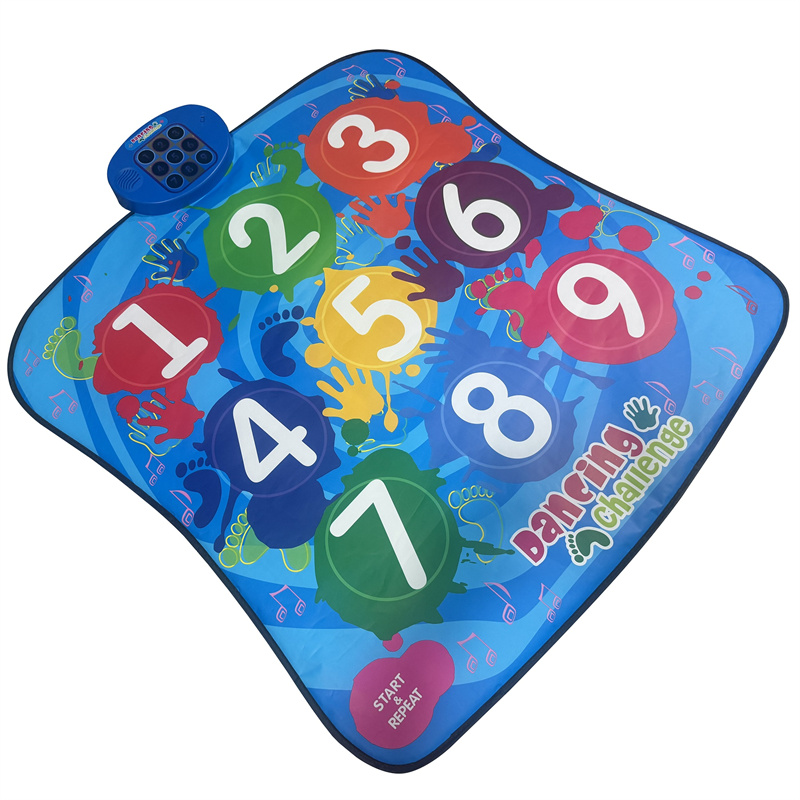
Coordination goes beyond just moving arms and legs. It involves managing the body's center of gravity during dynamic shifts. These mats force users to master spatial awareness.
Biomechanics experts know dynamic movement requires a "controlled fall." When you walk or dance, you constantly shift your weight forward. You catch yourself with the next step. The mat amplifies this concept. It forces users to plant one foot securely. They must establish balance before shifting their weight to reach the next sensor. If they rush, they stumble. Learning to control this momentum transfer is vital. It creates the fluid coordination seen in experienced dancers and athletes.
Many games require players to reach across their midline. Pressing diagonal buttons on a dance challenge playmat forces cross-lateral movement. The left foot must stretch to the top right sensor. This action engages both hemispheres of the human brain simultaneously. It improves upper-to-lower body alignment. Cross-body exercises are staple routines in pediatric occupational therapy. They enhance neurological communication and spatial reasoning.
You cannot hit precise targets rapidly while maintaining a "noodle-like" posture. Rapid footwork requires a solid foundation. Hitting sensors across a wide area demands intense core engagement. The abdominal and lower back muscles must fire constantly. They keep the torso upright while the legs move wildly underneath. This moves the user away from stiff, uncoordinated posture. It guides them into controlled, athletic stances. A strong core prevents falling and enables faster directional changes.
Physical activity always carries some risk of injury. Buyers rightfully express skepticism regarding the joint stress caused by jumping on hard floors. Understanding proper form and material safety eliminates these concerns.
Rapid jumping engages the Stretch-Shortening Cycle (SSC) in human muscles. This cycle acts like a rubber band, storing and releasing energy. However, repetitive SSC jumps can severely fatigue the knees and ankles. If done incorrectly, players risk shin splints or joint pain. We must prioritize E-E-A-T (Experience, Expertise, Authoritativeness, and Trustworthiness) principles here. Physical therapists advise limiting high-impact sessions. Take breaks. Listen to your body. Joint health always takes precedence over a high score.
We constantly emphasize the rule of "stepping over stomping." Many beginners smash their feet down to ensure the sensor registers. This sends shockwaves up the leg bones.
Land Softly: Roll from the ball of the foot to the heel.
Bend Knees: Keep a slight bend in the knees at all times. Never lock your joints.
Stay Light: Keep your center of gravity slightly elevated. Avoid heavy, flat-footed landings.
Correct form prevents injury. It also allows for much faster transitions between steps.
The physical construction of the mat dictates its safety. You cannot use a thin plastic sheet on a hardwood floor. It will slide, causing dangerous falls. We insist on thick EVA foam cushioning. This material absorbs impact, protecting developing knee joints. Furthermore, the mat requires a heavy-duty non-slip backing. The bottom texture must grip hard floors tenaciously. Never compromise on these two material requirements when selecting a product.
Not all products perform equally. A poor kids fitness dance mat frustrates users and ends up in the closet. You must evaluate options systematically.
We define latency as the time between stepping and the machine registering the score. Latency is an absolute dealbreaker. If the mat lags behind the music, it destroys the rhythm-building feedback loop. Users become confused. They step off the beat to compensate for the hardware delay. Always prioritize products boasting zero-delay sensors. Read technical reviews specifically targeting sensor accuracy.
A good tool scales as the child’s coordination improves. If it only offers one speed, they will outgrow it in a week. Look for mats offering a deep progression system.
Memory Mode: Tests cognitive recall without strict time limits.
Free Dance: Allows creative expression without scoring pressure.
Multi-Speed Challenges: Pushes users to react faster as their muscle memory solidifies.
Evaluate built-in tracks versus external connectivity. Pre-loaded songs are great for quick setups. However, kids tire of the same ten melodies. Bluetooth connectivity changes the game completely. It allows the mat to remain relevant as musical tastes evolve. You can connect a phone and stream current pop hits. This feature guarantees long-term engagement.
Assess the practical, everyday rollout. Can you fold it easily? You must store it without damaging the delicate internal wiring. Folding it too tightly snaps the sensor connections. Look for mats designed with safe folding creases. Additionally, inspect the top layer. It must be waterproof. Sweaty feet and spilled water bottles are inevitable. An easy-to-wipe-down surface keeps the equipment hygienic and functional.
Feature Comparison Chart: Entry-Level vs Advanced Models | ||
Feature Category | Entry-Level Models | Advanced Models |
|---|---|---|
Cushioning | Thin plastic, requires carpet | Thick EVA foam, safe for hard floors |
Connectivity | Pre-loaded MIDI tracks only | Bluetooth integration for custom music |
Game Modes | Basic follow-the-light | Memory, syncopation, and multi-speed |
Storage | Rolls up, prone to wire damage | Creased folding lines, reinforced wiring |
A high-quality dance challenge mat successfully bridges the massive gap between sedentary screen gaming and structured physical education. It disguises rigorous cardiovascular exercise as an addictive game. This tool sharpens visual-to-motor translation, builds core stability, and ingrains a deep internal sense of rhythm. Moving forward, prioritize sensor accuracy and premium safety materials over flashy aesthetics. A lag-free, well-cushioned mat guarantees a superior experience. We highly encourage implementing short, 15-minute daily sessions. Consistency yields the fastest coordination improvements. Start building those motor skills today through the power of interactive play.
A: Children hit different developmental milestones at various times. Typically, kids ages 3 to 4 can handle basic stepping and free play. By age 6, most children possess the motor skills and cognitive focus required for structured, rhythmic game modes and faster BPM challenges.
A: Yes, but with caution. Thick carpets can sometimes interfere with sensor depression, causing missed steps. Furthermore, mats can bunch up on carpets. Look for models featuring rigid internal structures and heavy-duty anti-slip textures on the bottom to ensure stability across all floor types.
A: No. They serve as excellent supplemental "training wheels." They build internal rhythm, stamina, and physical confidence. However, they cannot replace a live instructor who teaches proper technique, advanced posture, and stylistic expression found in formal dance education.
A: Most high-quality mats support between 200 and 250 pounds. This makes them perfectly suitable for adult users looking for gamified cardio. Always check the manufacturer's specific guidelines to ensure the internal sensors can withstand adult-level impact forces.