
Please Choose Your Language
Views: 0 Author: Site Editor Publish Time: 2026-06-24 Origin: Site
Every drummer eventually faces the same infuriating problem: the dreaded kick drum creep. You strike the pedal, and your entire kit inches forward, leaving deep scratches across your beautiful hardwood floors. Many beginners understandably ask if a cheap living room rug can fix this issue. Unfortunately, household textiles simply cannot handle the intense kinetic energy of active music sessions. They bunch up under pressure and allow sharp hardware to pierce right through to the floorboards beneath. Purpose-built setups solve these precise kinetic and acoustic problems entirely. This guide breaks down the essential structural, acoustic, and functional criteria you must evaluate before upgrading your practice space. You will learn exactly why specialized materials vastly outlast thrift-store alternatives. We will help you navigate the physics of hardware security, vibration control, and floor protection to ensure your setup remains safe and consistent. By understanding these core factors, you can make a highly informed equipment decision.
Friction & Hardware Security: Purpose-built mats utilize high-friction rubberized backing and tightly woven tops to lock drum spurs in place, preventing equipment slippage.
Acoustic & Vibration Control: Thick, specialized materials provide acoustic decoupling, reducing impact noise transmitted through floors—crucial for shared living spaces or studios.
Floor Protection ROI: The cost of a dedicated mat is vastly outweighed by the prevention of deep gouges in hardwood or damage to underlying carpets from kick drum spikes.
Evolving Functionality: Modern setups increasingly rely on a multi-functional drum kit playmat to accommodate hybrid kits, electronic configurations, and ensemble spaces.
Let us dive deeply into the exact kinetic energy transfer involved during active drumming. Forward momentum generates massive force from the kick pedal. Every time you strike the bass drum, aggressive energy pushes the entire shell forward. Your equipment requires a highly counter-friction surface to stay securely anchored. Standard living room rugs fail this critical physics test immediately. They bunch up heavily or slide smoothly under localized pressure. You eventually lose your optimal playing posture while chasing your own pedals across the room.
Next, we must thoroughly examine the serious "spur" problem. Kick drums and hi-hat stands rely heavily on sharp metal spurs. These aggressive spikes anchor the heavy gear securely. Standard household carpets completely lack the dense pile necessary for proper shock absorption. Sharp metal easily tears through weak, loose woven fibers. The spikes then pass the structural damage straight to the delicate floor beneath. You ruin your expensive hardwood flooring very quickly without realizing it.
Many forum users frequently suggest a DIY thrift-store rug approach. This path creates a dangerous false economy for musicians. Cheap rugs completely lack specialized anti-slip rubber bases. You experience frustratingly inconsistent leveling across your delicate pedal setup. Furthermore, unraveled rug edges quickly turn into dangerous trip hazards in dark studios. Relying on makeshift household textiles ultimately damages your expensive gear. The constant shifting forces you to reset your posture repeatedly. This breaks your creative flow entirely during intense practice sessions.
A high-quality drum mat relies on carefully engineered layers to perform effectively. The bottom layer entirely dictates your grip and floor isolation. Industry standards strictly demand non-skid, heavy-duty rubber or thick PVC backing. This dense foundation stops dangerous micro-shifts during heavy double-bass play. It grips the hard floor firmly without leaving sticky chemical residues behind.
The top layer rigorously manages surface density and long-term durability. You absolutely need tightly woven, industrial-grade fabric. This top material must fiercely resist heavy fraying from constant hardware friction. Electronic drum pedals often use aggressive hook-and-loop fasteners for extra grip. A dense top layer easily handles these abrasive attachments without shedding messy fibers everywhere.
Acoustic decoupling provides another massive performance advantage for home studios. The Gearspace audio engineering community frequently emphasizes this vital concept. We must distinguish clearly between sound absorption and sound isolation. Room acoustics heavily rely on absorption to stop airborne echoes. Impact noise relies entirely on structural isolation. A proper dedicated surface directly reduces intense structural vibration. It effectively stops the low-frequency thumps sent straight through your sensitive floor joists.
Inspect the rubber backing carefully for uniform thickness across all edges.
Test the top fabric weave for stiffness to ensure hardware cannot pierce it.
Ensure the corners feature reinforced stitching to prevent long-term fraying.
Verify the backing material uses non-toxic compounds to protect delicate floor finishes.
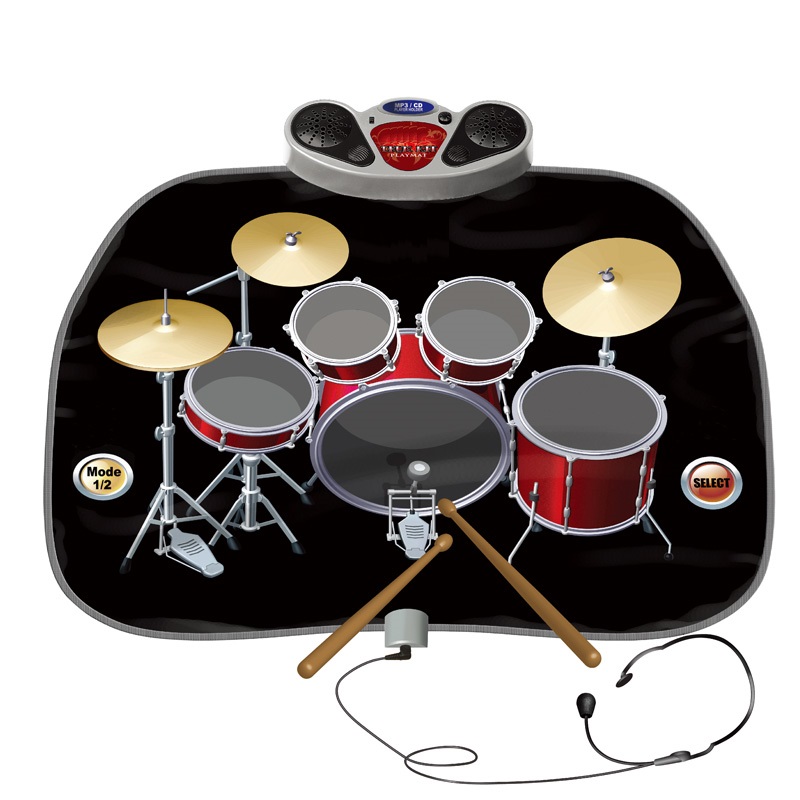
Electronic drumming completely changes your foundational spatial requirements. E-kits need specialized surfaces for several highly specific functional reasons. They require strong grip, but also demand smart cable management systems. Drummers must anchor various auxiliary pedals securely without damaging delicate trigger wires. The right surface keeps the sensitive electronic rack entirely motionless during aggressive tom fills.
Interactive and family setups demand different aesthetic features entirely. You might frequently explore a super drum kit playmat for dynamic modern configurations. These hybrid music setups often include gamified learning tools for beginners. They absolutely require safe, highly durable, and easily cleanable materials. Visually distinct play areas help young learners focus better during daily practice. It creates a dedicated physical zone specifically for active creative exploration.
Versatility matters immensely in any modern, shared practice space. A dedicated multi-functional drum kit playmat serves as a perfectly clear spatial boundary. It defines the designated practice zone neatly in shared living spaces. It actively protects sensitive equipment from harmful floor dust. More importantly, it provides a perfectly consistent playing feel. You get the exact same tactile pedal response regardless of the room's native flooring.
Many drummers make a critical mistake here. They assume electronic kits do not need floor protection simply because they generate less airborne volume. The physical pedal impact still causes significant structural vibration. It creates severe floor wear over time if left unprotected.
Measuring your exact floor footprint remains an essential first step. You must map out the entire perimeter of your unique setup. Compact electronic kits usually fit perfectly on a standard 4x4 foot surface. Full 5-piece acoustic setups require much larger floor dimensions. You typically need at least a 5.5x4.5 foot area for safety. The throne must sit entirely on the protective fabric to anchor the kit properly.
Ensemble considerations change the traditional sizing rules entirely. Band practices require unified, stable floor spaces for everyone. A larger music ensemble playmat comfortably accommodates multi-instrumentalist corners. It unifies the visual aesthetic of the rehearsal room beautifully. It helps effectively control complex room vibrations from bass amps and drum shells simultaneously. You can easily manage multiple players' physical footprints without overlapping messy, slippery rugs.
Transport logistics deeply impact working gigging musicians every single weekend. You must compare flexible roll-up versus rigid fold-up designs carefully. We evaluate the weight-to-portability ratio constantly before hitting the road. Gigging drummers desperately need a surface laying flat instantly on stage. You cannot afford annoying edge-curling right before a major performance begins. Roll-up designs usually prevent permanent deep creases much better than stiff folding alternatives.
Standard Kit Sizing Guidelines | ||
Drum Setup Type | Minimum Recommended Dimensions | Primary Use Case |
|---|---|---|
Compact Electronic Kit | 4 x 4 ft (120 x 120 cm) | Bedrooms, tight apartment spaces |
Standard 4-Piece Acoustic | 4 x 5 ft (120 x 150 cm) | Small club gigs, practice rooms |
Full 5-Piece Acoustic + Cymbals | 5.5 x 4.5 ft (165 x 135 cm) | Studio recording, larger stages |
Hybrid/Ensemble Setup | 6 x 6 ft or larger | Shared spaces, multi-musician jams |
Evaluating the ultimate return on investment involves looking far past the initial purchase. You must compare the upfront premium cost against massive future property damages. Hardwood floor repairs demand significant manual labor time and massive expenses. The constant mental distraction of adjusting a creeping setup ruins practice sessions entirely. A premium, purpose-built surface eliminates both of these severe headaches permanently. It preserves the structural value of your home perfectly.
You should base your final choice strictly on specific personal shortlisting criteria. We strongly recommend prioritizing structural features based on your specific daily environment.
If gigging frequently: Prioritize extremely lightweight, highly flexible designs. Ensure they include durable nylon carry bags for rapid, effortless transport.
If in an apartment or upstairs space: Prioritize maximum material thickness. Look deeply for specialized acoustic foam layers and exceptional downward vibration dampening capabilities.
If for shared or active playrooms: Prioritize supreme long-term surface durability. Choose easily vacuumed, non-toxic materials specifically built for continuous high traffic.
If recording in a studio: Prioritize tightly woven fabrics that reject dust. This keeps your sensitive microphone cables perfectly clean during long tracking sessions.
Feature Comparison Chart: Standard vs Premium | ||
Feature Category | Standard Household Rug | Purpose-Built Floor Protection |
|---|---|---|
Bottom Friction | Low (Slides easily) | High (Rubberized non-skid) |
Spur Resistance | Poor (Tears frequently) | Excellent (Dense industrial weave) |
Acoustic Isolation | Minimal (Absorbs slight echo) | Strong (Decouples floor vibration) |
Edge Curling | High risk over time | Low risk (Weighted corners) |
A dedicated floor setup acts as a critical structural necessity rather than a mere aesthetic luxury. It guarantees perfectly consistent, highly safe, and active music play for many years. You protect your valuable floors while drastically improving your room's acoustic isolation. You also eliminate the constant, agonizing frustration of shifting hardware during intense creative sessions. This strategic investment allows you to focus entirely on your rhythm.
Before making your final selection, take highly precise measurements of your room. Measure your kit's exact outer dimensions carefully. Ensure you include the drummer's throne footprint in your final math. The entire heavy throne must sit securely on the boundary surface for maximum stability. Once you document these critical measurements, select a highly rated option from a trusted industry retailer. Secure your physical foundation today to drastically elevate your daily practice sessions.
A: Yes. Many Reddit forums show beginners wondering if they can skip this purchase. However, learning proper foot technique proves completely impossible if your pedals constantly move away from you. A stable foundation ensures your muscle memory develops correctly from day one.
A: Yes, you certainly can. In this scenario, it acts as a dedicated carpet protector against sharp hardware spikes. Just ensure it features a very stiff rubber backing. This prevents a spongy feel from developing beneath your cymbals, keeping your entire rig fully stabilized.
A: We must clarify their exact acoustic limits. They do not completely soundproof a room against airborne noise from cymbals or shells. Instead, they strictly mitigate structural impact noise. They stop kick pedal thumps from traveling directly through the wooden floorboards into neighboring rooms.