
Please Choose Your Language
Views: 0 Author: Site Editor Publish Time: 2026-03-12 Origin: Site
Music shapes early learning. Babies respond to rhythm fast. A baby musical toy piano turns simple play into discovery.
Many parents ask which piano works best. Options include keyboards, playmats, and wooden toys. Products like those from WEHAND TOYS show how musical play can support early skills. Learn more about our products as we explore the best baby musical toy piano for early learning.
Music activates multiple areas of the brain at the same time. When babies hear different tones and rhythms, their brains begin building connections that support memory and pattern recognition. Research suggests that early musical exposure may improve listening skills and cognitive flexibility.
A baby musical toy piano helps create this environment. When toddlers press keys and hear sounds, they start linking actions with results. This simple learning process strengthens early problem-solving abilities and encourages curiosity.
Playing with a musical toy piano requires coordination. Babies press keys, tap buttons, and sometimes step on playmat keys. These movements strengthen finger control and hand-eye coordination.
For younger infants, piano gyms encourage kicking and reaching movements. For toddlers, small keyboard toys improve fine motor skills. These physical interactions support muscle development and spatial awareness.
Children naturally experiment with sound. A musical toy piano gives them a safe way to explore rhythm and melody. Instead of repeating a fixed pattern, they can create their own simple tunes.
Over time, this experimentation encourages creative thinking. Many early childhood experts believe music toys help children express emotions and develop confidence through playful learning.
Note: Early music toys are not meant to teach professional piano skills. Their goal is to build curiosity and cognitive development during early childhood.
The best baby musical toy piano should match the physical abilities of toddlers. Keys must be wide enough and easy to press so small fingers can interact comfortably. If keys are too stiff or narrow, children may become frustrated and quickly lose interest in the toy. A responsive keyboard helps toddlers feel successful when they press a key and hear a sound immediately.
Bright colors also help toddlers recognize patterns and stay visually engaged during play. Many educational piano toys use color-coded keys to introduce musical notes while also helping children identify colors. This combination of sound and visual cues supports both early music learning and cognitive development. When a child repeatedly presses the same colored key and hears the same tone, they begin to understand basic cause-and-effect relationships.
Sound quality plays a major role in the learning experience. Toys that produce harsh or distorted sounds may discourage children from interacting with them for long periods. A well-designed baby musical toy piano produces clear tones that resemble real musical notes, making the experience more enjoyable and educational.
Good sound quality also improves auditory development. Babies learn to distinguish between different tones and rhythms as they listen and experiment with the keys. Over time, they may begin repeating certain notes or rhythms, which strengthens listening ability and memory. Consistent sound quality helps toddlers associate each key with a predictable musical output.
Toddlers often drop toys, press buttons repeatedly, or drag them across floors. Because of this behavior, durability is essential for any baby musical toy piano. Most high-quality piano toys use safe plastic materials, soft fabrics, or sturdy wooden construction to handle daily use.
These materials reduce the risk of breakage and ensure long-term play. Safe toy design also includes rounded edges, smooth surfaces, and secure battery compartments to prevent accidents. A durable toy piano can continue supporting learning and play for several years as the child grows.
Tip: Choose musical toys labeled as non-toxic and child-safe to ensure they meet international toy safety standards.
Electronic toy keyboards are among the most common musical toys for toddlers. These toys usually include multiple instrument sounds, demo songs, rhythm patterns, and sound effects. Some advanced models also allow recording and playback, which adds another level of interaction.
Children enjoy exploring different sound effects and musical styles. These features keep toddlers engaged for longer play sessions while gradually introducing them to the concept of musical variety.
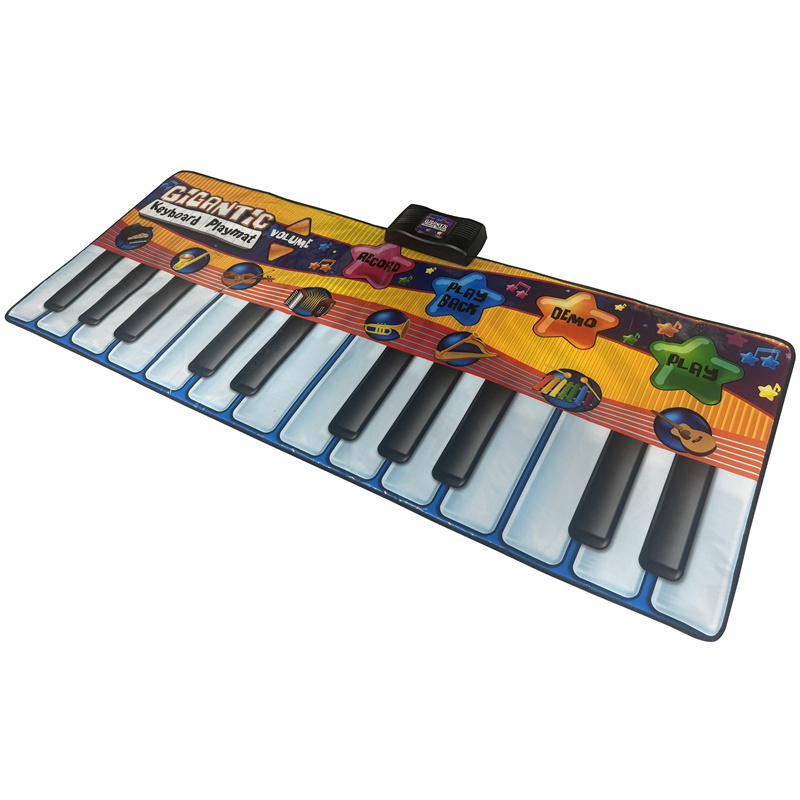
Piano playmats are designed for active play and movement. Instead of pressing keys with hands, babies step, crawl, or jump on large musical keys printed on the mat. Each movement triggers a sound or musical note.
This design encourages physical activity while introducing music. Piano playmats are particularly helpful for toddlers who are learning to walk or balance. They combine music exploration with gross motor skill development.
Educational piano toys combine musical play with learning elements. Many of these toys include numbers, animal sounds, alphabet letters, or color recognition features. When children press certain keys, the toy may speak words or play educational sounds.
These toys support language learning and auditory development at the same time. Parents often choose them when they want toys that combine entertainment with early education.
Wooden toy pianos provide a more traditional musical experience for toddlers. Many models feature tuned keys and a design that resembles real pianos. This allows children to develop a basic understanding of musical notes and rhythm.
Although wooden piano toys are often heavier and slightly more expensive, they offer excellent durability and aesthetic appeal. They can also last longer than plastic toys, making them suitable for long-term use.

Some toy pianos allow children to record short melodies and play them back later. This feature encourages creativity because toddlers can experiment with sounds and listen to their own musical creations.
Recording functions also help children recognize patterns. When they hear their recorded sounds repeated, they begin understanding rhythm and repetition in music.
Some musical toy pianos include microphones so children can sing along while playing. This feature promotes vocal confidence and expressive learning. Singing while pressing keys allows toddlers to combine sound, voice, and rhythm.
This interaction can strengthen musical engagement and make playtime more enjoyable for children who enjoy vocal expression.
Many toy pianos include different instrument modes such as piano, guitar, trumpet, violin, or drum sounds. This variety allows children to experience different musical tones and sound effects.
The ability to switch between instruments keeps toddlers interested in the toy. It also introduces them to different musical styles and encourages creative experimentation.
Volume control is important for both safety and convenience. Loud toys may become uncomfortable in indoor environments or during long play sessions.
Adjustable sound levels allow parents to control the noise while still providing musical interaction for their children. This feature is especially useful in homes where multiple family members share living spaces.
Piano playmats are ideal for babies who enjoy movement-based play. These toys encourage toddlers to step, crawl, and dance while producing musical sounds. The combination of movement and music helps develop coordination and balance.
These toys are particularly useful during early walking stages when children are learning how to control their movements.
Electronic toy keyboards offer the most features among baby musical toys. They often include demo songs, multiple instrument sounds, recording modes, and rhythm settings.
These toys provide many play possibilities and allow toddlers to explore sound in different ways. They are especially popular with children who enjoy pressing buttons and discovering new effects.
Wooden toy pianos are excellent for children who show a deeper interest in music. Their design resembles traditional pianos, which helps introduce children to the structure of real musical instruments.
These toys are also very durable and can last for years. Their classic design makes them a popular choice for parents who prefer educational toys with long-term value.
Skill Area | Learning Result |
Fine motor skills | Pressing keys strengthens finger movement |
Listening ability | Babies learn sound patterns |
Creativity | Children create simple melodies |
Confidence | Successful play encourages exploration |
Music toys stimulate multiple areas of development. They encourage both movement and thinking, making them effective early learning tools.
Choosing the best baby musical toy piano depends on safety, sound, and learning features. It helps babies explore music and build motor skills. Quality designs, like baby musical toys from WEHAND TOYS, provide engaging sounds and safe play that support early development and joyful musical discovery.
A: A baby musical toy piano is a learning toy that lets toddlers press keys to create sounds and explore rhythm and melody.
A: A baby musical toy piano helps develop motor skills, listening ability, and creativity during early childhood play.
A: Toddlers press keys, tap buttons, or step on playmat keys to produce sounds and learn basic music patterns.
A: Most baby musical toy piano toys cost $10–$80 depending on features, sound modes, and durability.