
Please Choose Your Language
Views: 0 Author: Site Editor Publish Time: 2026-07-29 Origin: Site
Stepping on an electronic floor instrument and getting delayed audio or ghost notes ruins the experience. Unresponsive keys happen when the internal sensor architecture lacks physical resistance from the surface beneath it. An incompatible floor compromises actuation force, leading to degraded user experience, physical fatigue, and safety hazards. If the floor gives way, the sensors cannot register the pressure accurately. This forces users to stomp harder, which damages the internal circuitry over time. We evaluate how different flooring materials impact sensor accuracy and outline mitigation strategies to optimize performance for any interactive setup. You need a solid foundation to ensure every footstep translates into immediate audio feedback. By understanding the mechanical relationship between the mat and the floor, you can eliminate dead zones and prevent accidental slips during active play sessions.
Modern interactive mat designs utilize distinct sensor types to function. Most rely heavily on membrane switch pressure sensors. Some advanced models use capacitive touch sensors instead. Membrane sensors require a specific threshold of compression to work. You must apply enough downward force to close the internal circuit. This closed circuit triggers the audio hardware instantly. Capacitive sensors detect electrical changes instead of physical pressure. However, membrane switches dominate the market for durability reasons. Ambient temperature affects these mechanical switches significantly. High humidity alters the flexibility of plastic substrates. Vinyl mat materials become highly rigid in cold environments. This rigidity increases the required trigger pressure dramatically. Users must step much harder to activate the sound. Warm environments make the vinyl significantly more pliable. Pliable materials require far less actuation force to trigger. You must account for these environmental variables when setting up your Musical Mat.
Every footstep on a flexible mat involves basic physics. Newton's Third Law dictates the mechanics of this interaction. The floor must push back with equal force against your foot. This counter-resistance compresses the sensor successfully. Surface deflection destroys this mechanical advantage completely. Soft floors give way under your body weight. This give alters the required actuation force drastically. It causes highly inconsistent responsiveness across the entire board. We call this phenomenon the pocketing effect. Soft surfaces allow the mat to bow around your foot. This bowing pre-tensions adjacent sensors unintentionally. Pre-tensioning causes false triggers or annoying ghost notes. The mat registers inputs you never actually made. A rigid floor prevents this pocketing effect entirely. It forces the sensor to compress straight down. This vertical compression guarantees accurate audio feedback every time.
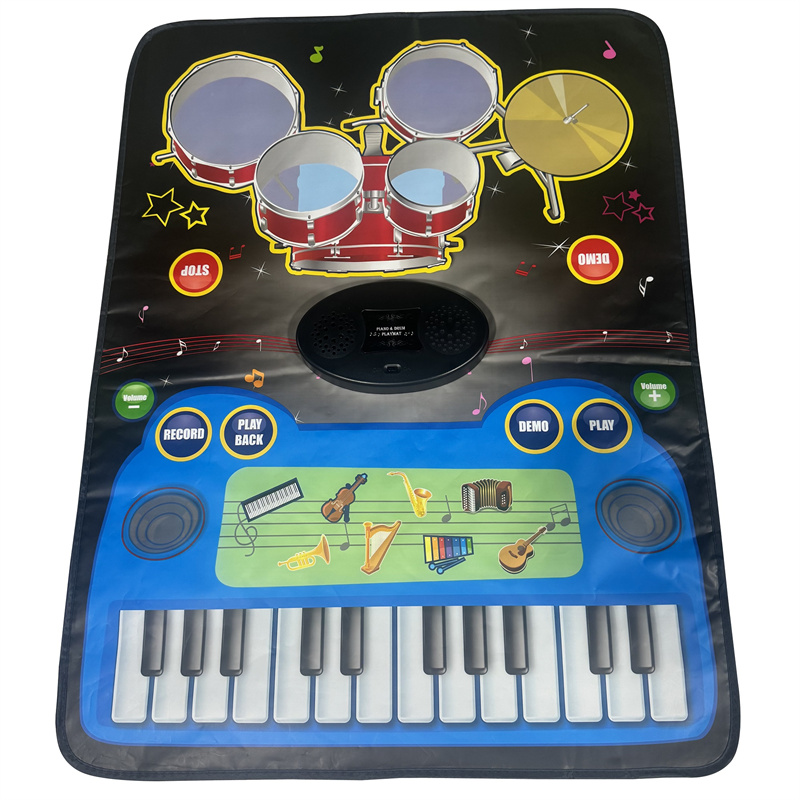
Hardwood provides excellent structural rigidity for electronic instruments. Laminate flooring shares these exact zero-compression characteristics. They represent the ideal baseline for maximum sensor accuracy. The floor does not absorb any kinetic energy from your steps. Every ounce of foot pressure transfers directly to the sensor. This guarantees an immediate and accurate audio response. However, you face a primary trade-off with these surfaces. These floors lack adequate surface friction. An interactive musical mat will migrate during active use. This migration creates severe slip hazards for users. Players can easily lose their balance and fall. You also risk permanent surface scratching. Dust particles get trapped beneath the mat easily. Vigorous stepping grinds these particles into the expensive wood finish. You must clean the floor thoroughly before deployment.
Stone and ceramic tile offer absolute structural rigidity. They provide maximum counter-force for pressure-based sensors. You will never lose actuation force to surface compression. However, wide grout lines introduce significant functional problems. Deep grout lines create physical dead zones across the floor. The mat sags into these gaps under direct foot pressure. This creates uneven tension across the internal sensor grid. Stepping on a grout line often results in completely missed notes. Thermal conductivity also plays a major role here. Cold tile surfaces pull ambient heat from the room. They affect the pliability of PVC-based materials negatively. A cold mat becomes stiff and highly unresponsive. You might need to warm the room beforehand to ensure flexibility.
Low-pile commercial carpet serves as a viable middle ground. It offers moderate resistance and very high friction. You face a very low slip risk in this scenario. The sensors still receive adequate counter-force to function properly. High-pile carpets present massive failure points, however. Plush or shag carpets absorb far too much kinetic energy. The mat bunches up during active play sessions. This bunching risks severe internal wire fatigue. Excessive bending snaps delicate copper connections inside the unit. Mechanical strain destroys internal solder joints very quickly. The mat deforms over the soft fibers constantly. You have to stomp aggressively to trigger any sounds. This stomping accelerates hardware degradation significantly. Avoid thick carpets whenever possible to protect your equipment.
Dense rubber works exceptionally well for dedicated play areas. EVA foam provides a decent sub-surface option if chosen correctly. You must verify the material density before installation. Look for a Shore A hardness rating of 60 or higher. This specific density supports a piano keyboard playmat properly. It prevents the floor from absorbing the actuation force. Soft foam fails to provide this necessary support. It acts exactly like high-pile carpet under pressure. Foam does offer excellent shock-absorbing properties overall. This protects human joints during extended play sessions. However, it can impact high-speed sensor responsiveness negatively. Finding the right density balance remains absolutely necessary.
Raw concrete delivers absolute structural rigidity for any setup. Sealed concrete performs equally well for overall sensor accuracy. You will never experience pocketing on these hard floors. Environmental challenges complicate sub-grade setups, however. Moisture vapor transmission occurs naturally through concrete slabs. This moisture can damage internal electronics very quickly. You must install proper vapor barriers to protect the circuitry. Abrasive wear presents another serious issue on raw floors. Rough concrete shreds the underside of the mat over time. Unpolished surfaces act like sandpaper during vigorous use. You must protect the mat backing at all costs. Always use a protective underlay on raw concrete surfaces.
Sequential triggering requires a mathematically perfect setup. You might run up the scale quickly during a song. You might execute rapid glissando movements across the keys. A completely flat surface is critical here to succeed. Hard floors prevent skipped notes during these fast transitions. The sensors reset instantly without any surface drag. Surface levelness dictates key-to-key consistency entirely. A long linear sensor layout exposes minor floor dips. Uneven floors make some keys much harder to press. You must ensure the subfloor is perfectly level first. This guarantees uniform actuation force across all octaves.
Multi-touch requirements demand precise floor calibration. Multiple users might play the instrument simultaneously. Complex chord inputs require simultaneous hands-and-feet activation. Uneven surfaces cause catastrophic weight distribution failures. A music ensemble playmat struggles immensely on warped floors. Only one of the intended notes might register correctly. The floor fails to support the secondary pressure points. Physical shifting occurs constantly with multiple users involved. They apply vector forces in different directions simultaneously. The playmat surface twists under this immense mechanical strain. A high-friction, rigid sub-surface prevents this twisting entirely.
You must evaluate stabilization solutions very carefully. Double-sided rug tape works well for permanent setups. Silicone grip pads offer excellent temporary stabilization. Rubberized mesh underlays provide the best overall balance. You must specify the correct underlay thickness, however. Underlays must be strictly less than 2mm thick. Thicker pads introduce unwanted compression beneath the sensors. This compression mimics a soft carpet perfectly. It destroys the sensor accuracy you just gained. Keep the stabilization layer as thin as physically possible.
Homes with plush carpets require structural architectural workarounds. You can utilize a custom-cut MDF board effectively. High-density plywood serves as an excellent staging platform. A rigid polycarbonate chair mat works exceptionally well too. Place these rigid boards directly beneath the mat. They restore the necessary counter-resistance immediately. You must consider the safety implications of raised edges. Rigid boards create dangerous tripping hazards in playrooms. You must taper or bevel the edges carefully. Beveled edges prevent accidental falls during active use.
Stomping on a rigid floor creates severe acoustic problems. Impact noise travels through the floor structure very easily. Downstairs neighbors will hear every single footstep clearly. You must recommend multi-layered isolation setups to mitigate this. Place a dense 1/8-inch neoprene sheet down first. Mass-loaded vinyl sheets also absorb structural vibrations effectively. Place your non-slip underlay on top of this isolation layer. This setup dampens noise without degrading sensor actuation. It balances acoustic management with technical performance perfectly.
Plasticizer migration ruins expensive hardwood floors permanently. Vinyl backings on cheap mats contain active chemical compounds. These chemicals react with polyurethane wood finishes over time. This reaction causes permanent yellow discoloration on the wood. You cannot reverse this chemical damage once it occurs. We recommend breathable protective barriers exclusively. Natural rubber pads remain safe for delicate floor finishes. Felt underlays also protect the polyurethane coating effectively. Never place raw vinyl directly on finished wood floors.
Synthetic carpets generate massive static electrical buildup. This static interferes with the internal logic board directly. It causes audible pops in the speaker system. It can even reset the instrument mid-song unexpectedly. You must manage this electronic interference proactively. We recommend anti-static spray treatments for surrounding carpets. Grounding mats help dissipate the electrical charge safely. Keep the setup away from high-static nylon carpeting. Proper placement prevents most static-related hardware failures entirely.
Use this matrix to evaluate your specific flooring situation and determine the necessary stabilization accessories.
| Floor Surface | Sensor Responsiveness | Slip Risk Level | Floor Protection Requirements | Acoustic Transmission | Required Stabilization Accessories |
|---|---|---|---|---|---|
| Hardwood / Laminate | 98% (Excellent) | High | High (Scratch/Chemical risk) | High (Loud impact noise) | <2mm Rubberized Mesh |
| Tile / Stone | 95% (Good, drops at grout lines) | High | Low | Extreme (Echo and impact) | Silicone Grip Pads |
| Low-Pile Carpet | 85% (Acceptable) | Low | None | Low (Naturally dampens) | None required |
| High-Pile Carpet | 40% (Poor) | Low | None | Very Low | Rigid MDF or Polycarbonate Board |
| Sealed Concrete | 100% (Perfect) | Medium | Medium (Abrasive wear on mat) | High | Vapor Barrier + Thin Felt Pad |
| EVA Foam (Shore A 60+) | 90% (Very Good) | Low | None | Low (Absorbs vibration) | Double-sided Rug Tape |
You must evaluate your primary play area thoroughly before installation. Provide a diagnostic checklist for users to ensure optimal performance.
Modifying your play area requires a dedicated budget. Weigh the cost of purchasing rigid under-boards carefully. Compare this to the operational lifespan of the mat itself. A simple polycarbonate board extends hardware life by years. It prevents internal wire fatigue completely. Specialized non-slip mats cost very little upfront. They prevent severe injuries from slip-and-fall accidents. DIY budget options exist for optimizing surface rigidity. You can source scrap MDF from local hardware stores easily. Off-the-shelf solutions offer convenience but cost more. Invest in surface optimization to guarantee accurate performance.
A: Skipped notes usually result from a lack of surface counter-resistance. Uneven subfloors prevent the membrane switch from closing properly. Sensor pocketing on soft carpet absorbs your foot pressure. Internal sensor fatigue from repeated bending also causes unresponsive nodes.
A: Thick carpet absorbs kinetic energy, causing the sensors to fail. The mat will bunch up and damage internal wiring. We recommend placing a rigid board underlay beneath the mat. Use MDF or a polycarbonate chair mat as a staging platform.
A: Hardwood floors lack surface friction. You must use stabilization accessories to prevent migration. Use ultra-thin, dense rubber mesh underlays. Silicone rug grippers or non-adhesive felt-and-rubber pads also work exceptionally well without damaging the wood finish.
A: Yes, wide or deep grout lines create physical dead zones. The flexible material sags into these gaps under pressure. The membrane cannot compress against a solid surface. This lack of counter-resistance leads directly to unresponsive sensor nodes.
A: It depends entirely on the foam density. Soft foam absorbs impact and compromises actuation force. You need high-density foam with a Shore A hardness rating of 60 or higher. Dense foam provides enough resistance to trigger the sensors accurately.