
Please Choose Your Language
Views: 0 Author: Site Editor Publish Time: 2026-06-17 Origin: Site
Modern parents face a tough dual challenge every single day. You want to offer engaging screen time, but you also need your children to get adequate cardiovascular physical activity. In traditional dance classes, we often see children struggling to find the beat and falling behind their peers. This causes frustration and a sudden drop in motivation. Outdoor play also fails us during long winters or heavy rainy seasons. Furthermore, studio dance lessons remain incredibly expensive for many families trying to balance household budgets.
Fortunately, a kids dance mat serves as a scalable, weather-proof solution. It perfectly bridges the gap between digital gaming and physical exertion. You will discover how these interactive devices boost physical health and cognitive function simultaneously. We will also show you how to evaluate the best options to ensure long-term durability and safety for your household.
Sneaky Fitness: Dance mats disguise high-energy cardiovascular exercise as a video game, effectively reducing passive screen time.
Cognitive & Motor Skill Development: Physical stepping enforces actual rhythm, timing, and memory far better than handheld motion-control games.
Household Safety: Eliminates the risk of broken televisions caused by slipped or thrown controllers.
Evaluation Criteria: High-quality mats require an assessment of durability (PVC/Rubber), anti-slip properties, and visual feedback (LED systems).
Space Requirements: Optimal use requires a clear, safe operational zone of roughly 6x6 feet.
Developmental experts often champion the concept of "sneaky fitness." A dance mat for kids creates an immersive flow state. Children burn massive amounts of energy during play. They rarely perceive this exertion as a forced workout. It simply feels like playing an exciting arcade game. This elevated heart rate contributes directly to better cardiovascular health. It helps meet daily activity recommendations easily. This makes the equipment a highly reliable indoor active play toy. It saves the day during harsh winter weather. Families also rely heavily on it during high-pollution days when outdoor parks close.
Matching precise footfalls to a music dance mat forces complex cross-body coordination. It heavily improves physical balance over time. The cognitive load matters just as much here. Players must memorize rapidly changing visual patterns on the screen or pad. They then react quickly to these sudden visual cues. This dual demand strengthens short-term memory and spatial awareness. The brain actively builds new neural pathways bridging visual processing to gross motor function.
These interactive devices offer deep psychological benefits. They feature progressive difficulty levels scaling from beginner to expert. Children learn to manage their initial frustration effectively. They practice intense persistence to master harder songs. Conquering difficult tracks builds immense self-confidence. They develop a strong growth mindset through a structured cycle of trial and error.
Consider the typical mastery loop a child experiences:
Attempt a new, fast-paced song for the first time.
Fail early and identify specific rhythmic mistakes.
Practice the footwork sequence at a much slower speed.
Succeed on the normal setting and feel a surge of accomplishment.
Many parents naturally compare a physical pad to console-based motion games. Titles utilizing hand-held remotes dominate the digital market. However, a massive "timing deficit" exists within these systems. Motion controllers typically track only the gyroscope inside a player's hand. Kids quickly learn to "cheat" the video game. They sit on the couch and merely flick their wrists. They never learn true beat-matching or rhythm. Conversely, a rhythm game mat for children enforces precise, full-body timing. You have to step on the correct arrow at the exact right millisecond.
Comparison Chart: Controller Games vs. Physical Mats | ||
Feature | Controller-Based Games | Physical Dance Mats |
|---|---|---|
Rhythm Accuracy | Low (easily manipulated by wrist flicks) | High (requires exact foot placement) |
Physical Exertion | Variable (can be played sitting down) | Consistently High (forces standing and jumping) |
Motor Skill Focus | Upper body and arms | Full body, legs, and core balance |
Intense controller-based dancing carries incredibly costly risks. Sweaty hands easily lead to thrown remotes. You might end up staring at a smashed television screen. Foot-based stomp pads provide a significantly safer alternative. Children keep their hands completely empty during play. The physical action stays safely grounded on the floor. This protects both your child from tripping and your fragile living room electronics from flying objects.
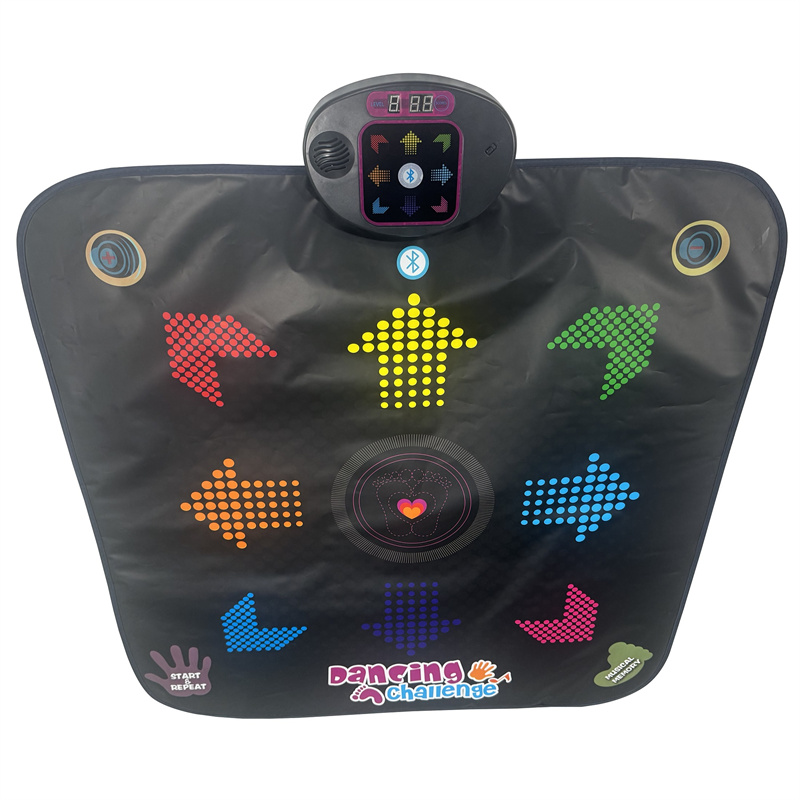
Evaluate the one-time investment of a high-quality unit. Compare this directly to recurring monthly fees for local studios. Dance classes often cost hundreds of dollars over a single season. You also avoid buying expensive gaming console bundles requiring constant software updates. A standalone pad offers endless replayability right out of the box. You pay once and enjoy years of physical activity. It serves as an incredibly cost-effective fitness tool for the entire family.
Modern platforms support engaging multiplayer and dual-pad configurations. Competitive scoring mechanics facilitate excellent cooperative play. They actively reduce sibling friction during indoor confinement. Kids take turns trying to beat each other's high scores. They cheer one another on during particularly difficult routines. The entire family can join the fun on rainy weekend game nights. It transforms passive TV watching into active family bonding.
Stay away from cheap, crinkly plastics. They tear easily and slip constantly underfoot. Instead, evaluate options built from heavy-duty PVC. Seek out high-density rubber blends to absorb joint impact safely. Children's developing knees require proper cushioning during repetitive jumping. Look specifically for "reinforced edges." This specific manufacturing feature prevents fraying from aggressive stomping over time.
Common Mistakes to Avoid:
Ignoring the base material thickness before purchasing.
Placing thin plastic models directly on slippery hardwood floors.
Overlooking edge stitching quality, leading to early tears.
Interactive, light-up LED patterns are absolutely critical. Younger users (ages 3 to 6) rely heavily on visual cues. They often struggle to follow strictly auditory beats at first. Flashing arrows guide their feet precisely and clearly. This visual feedback loop accelerates their overall learning curve. It prevents them from feeling overwhelmed by complex, fast-paced rhythms.
Assess the built-in song varieties carefully. Then, look for modern Bluetooth compatibility. A closed software system limits long-term replay value. Bluetooth integration completely solves this problem. You easily connect a smartphone or tablet. The child streams their favorite current pop songs directly. They will never outgrow the built-in music library because the content remains infinitely expandable.
Hardware Specification Evaluation Guide | ||
Component | Basic Standard (Ages 3-5) | Premium Standard (Ages 6+) |
|---|---|---|
Material Core | Standard PE Plastic | Heavy-duty PVC / EVA Foam |
Visual Feedback | Static colored arrows | Dynamic LED light-up indicators |
Music Source | Pre-loaded MIDI tracks only | Bluetooth streaming capable |
Follow strict layout guidelines to ensure absolute safety. We recommend a minimum 6x6 foot clearance zone. This translates to roughly 1.8 by 1.8 meters of open space. Keep this operational zone entirely free of sharp furniture corners. Push coffee tables well out of the way before turning the device on. Clear away scattered toys to prevent accidental tripping during fast songs.
Consider performance across different room surfaces carefully. High-quality anti-slip bases work perfectly on bare hardwood. They also grip standard tile floors securely. However, thick carpets present a unique friction challenge. Prolonged use on plush rugs may cause unexpected sensor misfires. You might need a unit featuring a rigid foam insert. This internal structural block prevents the fabric from bunching up under heavy footsteps.
Adopt a structured approach for maximum health benefits. Start with a daily 15-minute scheduled "challenge." This helps build a solid physical habit quickly. Do this before the initial novelty wears off completely. Make it part of their daily after-school decompression time. Consistent usage yields the best cardiovascular and rhythmic results.
[Video Placeholder: 3-Minute Quick Setup and Gameplay Demo]
Investing in a dedicated stomp pad pays dividends for your child's physical health. It provides rigorous cognitive rhythm training while offering parents deep peace of mind. You successfully replace passive screen time with high-energy cardiovascular activity. The right purchase ultimately depends on matching your child's exact age to the correct material quality.
Always prioritize options offering dynamic LED feedback and robust Bluetooth connectivity. Take action today by measuring your living room floor space. Review specific technical specifications, especially PVC thickness and anti-slip grip layers. Selecting the proper equipment ensures years of active, joyful indoor play for your entire family.
A: Yes, but performance varies. Choose a mat with a deeply textured rubber grip or a rigid internal foam block to prevent the mat from bunching up or sliding during aggressive stepping.
A: Disconnect all power sources. Wipe the surface with a damp cloth and a mild, non-abrasive soap. Never use harsh chemicals or submerge the mat in water.
A: Stomping noise can be a factor. To mitigate this, place a high-density yoga mat or specialized acoustic foam under the dance pad to absorb sound and vibration.
A: Basic light-up models are suitable for ages 3 and up to develop gross motor skills. Advanced Bluetooth models with complex speed settings are ideal for ages 6 to 12+.