
Please Choose Your Language
Views: 0 Author: Site Editor Publish Time: 2026-06-10 Origin: Site
Modern baby gear has evolved dramatically over recent years. High-tech play spaces now offer valuable sensory and cognitive stimulation. They transform simple floor time into dynamic, interactive learning sessions. Babies engage deeply when their environment responds directly to their actions.
However, parents face a saturated market packed with flashy, noisy products. Many of these options are incredibly overstimulating. Others remain notoriously hard to clean or harbor potentially unsafe foam materials. You might invest in a mat hoping to encourage tummy time, only to discover it actually overwhelms your child. Worse, poor construction can create hidden hazards inside your home.
This guide provides a clear, evidence-backed framework to help you navigate these choices safely. You will learn how to evaluate and shortlist the right interactive mat without falling for clever marketing fluff. We detail crucial factors like strict safety compliance, verifiable non-toxic construction, and essential parental controls. Armed with this knowledge, you can confidently select an engaging, secure play space for your little one.
**Prioritize Decibel Limits:** Safe electronic mats must have adjustable volume controls that cap sound below 60–65 decibels to protect developing hearing.
**Material Trumps Tech:** Even the best tech is useless if the base material isn't safe; demand certified non-toxic foams (like IXPE) or machine-washable fabrics with removable electronic hubs.
**Age-Appropriate Interaction:** Newborns need passive audio-visual triggers (like piano kick mats), while toddlers benefit from active touch-point logic (interactive alphabet or animal sound mats).
**Sensory Balance is Mandatory:** Look for dual-mode mats that allow parents to completely disable the electronics for quiet, unplugged physical play.
An educational electronic mat acts as a foundational learning environment. You must scrutinize its underlying safety mechanisms before considering its educational features. Basic compliance is non-negotiable.
A baby's auditory system remains highly sensitive during their first year. Constant loud noise causes severe sensory fatigue. It triggers stress responses rather than joyful engagement. Prolonged exposure can even damage delicate ear structures.
The mat must feature a multi-stage volume switch. It should never default to maximum volume upon startup. Look for models strictly complying with ASTM F963 sound level standards for toys. These standards ensure decibel outputs remain within safe limits for developing ears.
Electronic components introduce physical risks. Loose batteries present a critical choking and ingestion hazard. Exposed wiring can lead to dangerous shocks or burns.
You must demand recessed, screw-secured battery packs. These packs should sit hidden inside padded, tamper-proof enclosures. A child should never feel the hard plastic of a battery box underneath the mat surface.
Babies spit up frequently. Toddlers spill drinks and drop snacks. You will need to clean this play space almost daily. Many electronic toys fail entirely when exposed to liquid.
Look for fully sealed, wipe-clean surfaces if you prefer foam-based mats. For fabric-based models, seek easily detachable electronic cores. You must be able to remove all wiring hubs safely before tossing the fabric into a washing machine.
Evaluation Criterion | Primary Risk Factor | Mandatory Requirement |
|---|---|---|
Volume Output | Sensory fatigue and hearing damage | Multi-stage switch, capped below 65 decibels |
Power Supply | Battery ingestion, electrical exposure | Screw-secured, recessed compartment |
Surface Hygiene | Bacterial buildup, liquid damage | Sealed wipe-clean foam or machine-washable fabric |
Different developmental stages require different stimuli. You cannot buy a single mat and expect it to serve a newborn and a preschooler equally well. Manufacturers design specific models to target distinct motor and cognitive milestones.
Newborns interact primarily through gross motor movements. Kick-and-play models excel during early tummy time. They help establish basic physical cause-and-effect understanding. A baby kicks their legs, and the mat produces a sound.
Always verify the structural integrity of the toy arch. The arch must remain completely stable even if the baby yanks on it. Ensure the piano component can angle upward or detach completely. This adaptability allows the toy to grow alongside the baby as they learn to sit unsupported.
Once babies begin crawling, they explore actively with their hands. An interactive playmat toy becomes a brilliant tool for honing fine motor skills. Babies learn to target specific zones to produce desired sounds.
You must carefully check the sensitivity of the internal sensors. The mat should respond immediately to a baby's light press. It should never require an adult's heavy footprint to activate. Weak sensors frustrate babies and discourage independent play.
Toddlers enter an explosive phase of cognitive and vocabulary development. They love active jumping, stepping, and mimicking words. Logic-driven mats introduce alphabets, animal noises, and simple counting games.
Avoid models featuring overly complex user interfaces. A toddler's electronic kids playmat needs clear, isolated interactive zones. Crowded designs cause visual confusion and diminish the educational value. Keep the layout simple and intuitive.
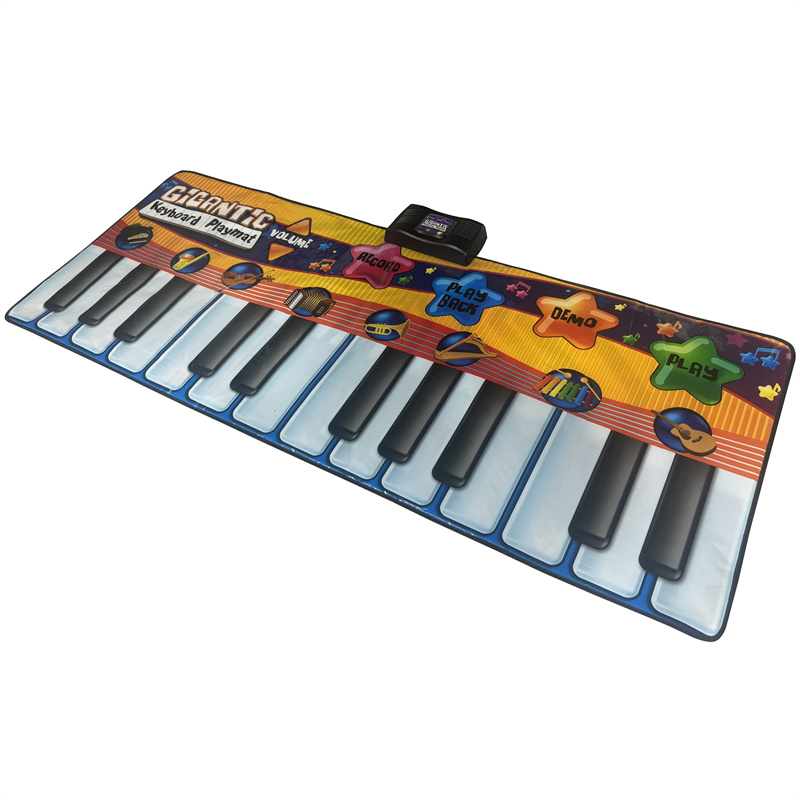
Even the most advanced technology fails if the physical foundation is flawed. A premium electronic playmat acts primarily as an orthopedic support structure. It protects joints during those wobbly early months.
Pediatric physiotherapy guidelines offer strict recommendations for floor play. An optimal mat thickness hovers around 1.5cm (0.6 inches) to 2cm. This specific depth absorbs sudden impacts perfectly.
However, it remains firm enough to prevent the baby’s limbs from sinking. Mats thicker than 2cm often behave like soft mattresses. Sinking hinders proper crawling mechanics. It forces babies to overexert their wrists and shoulders just to move forward.
You must aggressively reject PVC materials. You should also avoid formamide-heavy EVA foams. These materials off-gas harmful VOCs into the air your baby breathes.
Instead, shortlist models utilizing IXPE (Irradiation Cross-Linked Polyethylene) foam. IXPE offers superior durability and absolute non-toxicity. Alternatively, choose organic cotton bases. Always verify safety claims by looking for GREENGUARD Gold or Oeko-Tex Standard 100 certifications.
Integrated electronics should never compromise surface traction. Babies learn to stand and pivot using their bare feet. The mat must feature a textured top layer. This allows for excellent barefoot grip, supporting safe, confident movement.
Technology introduces incredible benefits, but it also carries the risk of overstimulation. A developing brain processes sensory input much slower than an adult brain. You must manage this input carefully.
Too many flashing lights and simultaneous noises quickly overwhelm infants. This hyper-stimulation triggers distress, crying, and disrupted sleep schedules. The goal is focused engagement, not chaotic distraction. An overwhelmed baby will actively avoid the play area.
Smart designs put the parent in complete control of the sensory environment. You should look for specific features to prevent sensory fatigue:
Independent Toggles: You need the ability to turn off flashing lights while keeping the sound active. Conversely, you should be able to mute the sound while letting the lights run.
Auto-Shutoff Timers: Battery-saving timers cap stimulation naturally. The mat should automatically power down after 5 to 10 minutes of inactivity. This prevents sudden noises from startling a resting baby.
Neutral Visual Base: A reliable mat uses a calm, low-contrast background color. This design choice ensures the interactive features stand out clearly. It prevents the entire surface from overwhelming the eye.
Real life with a baby is messy and unpredictable. The best play gear adapts to your home environment seamlessly. It must withstand daily abuse without breaking down.
Internal wiring often frays over time. You must evaluate how the mat folds for storage. Standard folding methods snap internal wires quickly. Premium models use hinged foam segments. Others utilize flexible printed circuits specifically designed for repetitive folding. These technologies prevent severed connections.
A lightweight mat sliding across a wooden floor creates a massive slipping hazard. Ensure your chosen mat features an anti-slip backing. Silicone dotting works exceptionally well. A reliable sound playmat must remain completely stationary when an excited toddler runs onto it.
Use a systematic approach when finalizing your purchase. Follow this simple progression to narrow down your options:
Filter by age group: Decide immediately between a newborn kick-piano model and a toddler touch-sensor design.
Verify materials: Check for non-toxic certifications. Confirm the presence of strict decibel caps.
Assess practicality: Evaluate the cleanability of the electronic components. Measure the folded storage dimensions to ensure it fits your living space.
The ideal interactive playmat operates as a high-quality physical support structure first, and a technological tool second. It must cradle your baby safely during those crucial early developmental stages. Only then should its lights and sounds come into play.
We recommend prioritizing models offering excellent physical safety. Look for a firm 1.5cm to 2cm thickness and certified non-toxic materials. Finally, demand granular control over the electronic output. Adjustable volume limits and independent power switches are essential. They empower you to create a safe, adaptable, and peaceful learning environment for your child.
A: Yes, provided they offer a firm, non-toxic surface (minimum 1-1.5cm thick) and the electronic features can be muted or controlled to avoid sensory fatigue during extended play.
A: For fabric models, remove the electronic hub/battery pack before machine washing. For foam or PU models, use a damp cloth with mild soap; never submerge them or use harsh chemical sprays that could degrade the waterproof seal protecting the sensors.
A: Yes. Pediatric guidelines suggest prolonged exposure to toys louder than 65 decibels can be harmful. Always select an educational electronic mat with adjustable volume controls and test it near your own ear before placing the baby on it.