
Please Choose Your Language
Views: 0 Author: Site Editor Publish Time: 2025-11-21 Origin: Site
In today’s fast-paced world, children are increasingly looking for ways to have fun while staying active. Parents and caregivers alike are always on the lookout for interactive activities that promote physical activity, enhance motor skills, and provide educational value. Dancing mats are a fantastic tool that does just that, offering a unique combination of fun, fitness, and learning. In this article, we will explore how dancing mats can significantly help kids develop coordination and rhythm, providing them with essential skills that will benefit them throughout their lives.
Coordination and rhythm are foundational skills that help children in many aspects of their lives, both physically and cognitively. Coordination refers to the ability to use different parts of the body together smoothly and efficiently, while rhythm is the ability to follow a regular beat or pattern in music or movement.
Both coordination and rhythm play vital roles in a child’s overall development. These skills contribute to a child’s ability to perform physical tasks, engage in sports, and develop cognitive abilities such as attention and memory. Early exposure to activities that foster these skills can enhance a child's ability to perform daily tasks, engage in group activities, and even learn new subjects like mathematics, language, and dance.
A dancing mat is an interactive, pressure-sensitive floor mat that guides children to step on arrows or patterns in sync with music or audio prompts. The mat reacts to a child’s movements by triggering specific instructions, typically through lights, sounds, or vibrations. The child must follow the cues by stepping on the corresponding areas of the mat, which leads to an engaging workout or learning experience.
What makes dancing mats so appealing is their ability to offer a hands-on, screen-free activity that can be used independently. By syncing movements to music, these mats teach children how to move with rhythm, making it a fun and effective way to learn while being physically active.
Feature | Description |
Pressure-Sensitive Sensors | Detects user movement by responding to pressure on the arrows or patterns. |
Portable and Foldable | Lightweight and easy to store, perfect for homes with limited space. |
Non-Slip Surface | Ensures safety by preventing slips, even during fast-paced movements. |
Adjustable Difficulty | Allows users to increase or decrease difficulty based on their skill level. |
Coordination is one of the first skills children learn as they grow, and dancing mats play a crucial role in enhancing this ability. As children step on various arrows or patterns on the mat, they are required to perform intricate foot movements. This encourages the use of different muscle groups simultaneously, thereby improving their overall coordination.
Dancing mats require children to use their hands and feet together in a synchronized manner, engaging their fine and gross motor skills. These movements help refine their ability to perform everyday tasks such as walking, running, and playing sports, all of which require coordination between their limbs and the rest of their body.
Motor skills, both fine and gross, are essential for children to perform activities that involve physical movement. Dancing mats can help children develop motor skills in a variety of ways. For instance, when following the prompts on the mat, kids are required to make quick, precise movements, which helps develop their fine motor skills.
Moreover, dancing mats promote the development of gross motor skills, such as balance and strength, by encouraging large movements like jumping, stretching, and bending. These exercises help build muscle strength and increase overall mobility.
Motor Skills | How Dancing Mats Help |
Fine Motor Skills | Engages small muscle groups for precise movements, enhancing finger and hand coordination. |
Gross Motor Skills | Improves large muscle movements like jumping, running, and balancing. |
Balance is an important aspect of physical coordination, and dancing mats can help improve this skill. Children must remain balanced while following the steps on the mat, which often requires shifting their weight from one foot to another. As they navigate more complex patterns and faster rhythms, they learn to stabilize their body and maintain control.
By practicing on dancing mats, children develop a better sense of their body’s position in space (known as proprioception), which aids in both physical balance and mental coordination. Improved balance helps prevent falls and injuries, especially during activities such as sports or dance.
A significant benefit of using dancing mats is their ability to teach children about rhythm. These mats are typically designed with music that guides the child’s movements, requiring them to step to the beat. The music, often in sync with arrows or patterns on the mat, helps children internalize the rhythm and understand how to move in time with it.
By practicing with the dancing mat, kids learn to recognize patterns in music and translate them into movement. This process helps enhance their musical ear, teaching them how to pick up on timing and rhythm, which is essential for any musical activity such as dancing, playing an instrument, or singing.
Dancing mats also provide valuable lessons in timing and sequencing. As children follow the arrows or patterns, they must execute each movement in a timely manner, which teaches them to sequence their actions. By stepping in the right sequence at the right time, children improve their ability to plan and execute movements, which is a key skill in many activities like sports, dance, and even problem-solving.
The constant practice of timing their movements with the rhythm improves their focus and memory, as children must remember the sequence of movements while coordinating with the beat.
Rhythm and Timing | Description |
Timing | Teaches kids to move in sync with the music, improving their ability to stay on beat. |
Sequencing | Helps children understand the importance of order and timing in completing movements. |
One of the main reasons dancing mats are so effective is that they turn learning coordination and rhythm into a game. The mat provides a fun, interactive challenge for kids, with rewards such as music and lights for completing tasks successfully. The gamification aspect makes it more engaging and encourages children to practice without feeling like they are doing traditional exercise.
Because dancing mats incorporate fun elements such as music, lights, and progress tracking, kids stay motivated and excited to practice. The more they play, the better they get at following the rhythms and patterns, which keeps them coming back for more.
Another important aspect of dancing mats is their ability to encourage continuous movement. Unlike passive activities such as watching TV or playing video games, dancing mats keep kids physically active by requiring them to move their bodies continuously. This helps children improve their stamina and energy levels, ensuring they remain engaged and active throughout the session.
Fun and Engagement | How Dancing Mats Help |
Interactive Gameplay | Makes learning fun with music, lights, and patterns, encouraging kids to move and participate. |
Continuous Movement | Keeps kids active and moving, improving physical fitness while they have fun. |
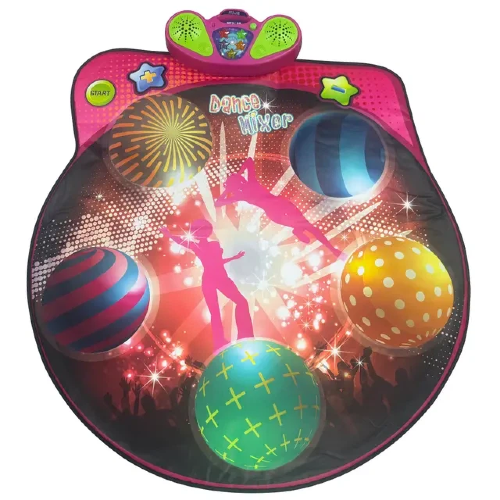
In addition to improving coordination and rhythm, dancing mats provide a full-body workout. By requiring kids to use multiple muscle groups simultaneously, dancing mats help build strength, flexibility, and cardiovascular health. Regular use can enhance children’s overall physical fitness, ensuring they remain healthy and active as they grow.
Dancing mats are also great for group play. When used in a family setting or with friends, children can compete, take turns, or work together to complete challenges. This fosters teamwork, cooperation, and social skills. Whether playing with siblings or friends, kids learn the value of collaboration and sharing as they engage with others.
The positive physical activity provided by dancing mats also has significant benefits for a child’s mental health. Exercise releases endorphins, the "feel-good" hormones, which improve mood and reduce feelings of anxiety or stress. Additionally, the challenge of following patterns and rhythms on the mat keeps kids focused and engaged, providing an enjoyable outlet for energy.
When selecting a dancing mat for your child, it's important to choose one that is suitable for their age and skill level. Younger children may benefit from mats that have simpler patterns and slower speeds, while older kids may enjoy more challenging routines with faster beats and complex movements.
Look for a mat that is durable and made from non-toxic, child-safe materials. Many mats are designed with a non-slip surface to prevent accidents, ensuring that kids can dance safely without slipping.
Consider mats that offer adjustable difficulty levels, customizable music, and educational features. Some mats may come with built-in lessons or interactive games that teach kids even more than just rhythm and coordination.
Dancing mats are an excellent tool for helping children develop essential skills such as coordination, rhythm, and balance. Through fun and interactive play, kids can enhance their physical fitness, improve cognitive abilities, and enjoy themselves in the process. Whether for solo play or group activities, dancing mats provide a versatile and engaging way for children to grow, learn, and stay active.
By incorporating dancing mats into your child’s daily routine, you can offer them a valuable learning experience that promotes both physical and mental development. These mats help children improve motor skills, develop a sense of rhythm, and foster teamwork in social settings.
For parents seeking high-quality dancing mats designed to support children’s growth, WEHAND TOYS MANUFACTURING CO., LTD. offers a variety of customizable solutions. With years of experience in creating interactive and educational toys, they can provide you with the perfect dancing mat to suit your child’s needs. Reach out to them to discover how their products can make learning fun while enhancing your child’s development.
1. What is a dancing mat and how does it help kids develop coordination and rhythm?
A dancing mat is an interactive floor mat that guides kids to step on arrows or patterns in sync with music, improving coordination, rhythm, and motor skills.
2. Can dancing mats improve my child’s motor skills?
Yes, dancing mats engage both fine and gross motor skills, helping kids refine their coordination and movement abilities.
3. Are dancing mats safe for children?
Yes, dancing mats are designed with safety features such as non-slip surfaces and child-friendly materials, ensuring a safe experience for kids.
4. Do dancing mats require a screen or TV?
No, dancing mats work independently without the need for a screen or TV. They operate using pressure-sensitive sensors to guide the child’s movements.
5. What age is appropriate for using a dancing mat?
Dancing mats are suitable for children of various ages. Younger kids may benefit from simpler mats, while older children can enjoy more complex patterns and faster rhythms.
6. Can dancing mats be used for group play?
Yes, dancing mats are great for group play, encouraging social interaction, teamwork, and friendly competition.
7. How can dancing mats help my child with rhythm and timing?
Dancing mats sync movements to music, helping children develop a sense of rhythm and learn how to move in time with the beat.
8. Are dancing mats beneficial for fitness as well as coordination?
Yes, dancing mats provide a full-body workout, helping children stay active, build strength, and improve cardiovascular health while developing coordination.