
Please Choose Your Language
Views: 0 Author: Site Editor Publish Time: 2026-06-18 Origin: Site
Early education researchers agree on a fundamental truth. Music accelerates cognitive and motor development in preschoolers. We see early exposure build vital neural pathways for spatial reasoning and language processing. However, traditional instruments demand precise fine motor skills. Toddlers simply lack this required manual dexterity. This physical mismatch quickly creates frustration instead of joy during early learning sessions. Young learners need tools matching their current physical capabilities.
Enter the musical mat. These interactive surfaces bridge the gap between gross motor play and foundational music theory. They utilize cause-and-effect auditory learning perfectly suited for developing minds. Children simply step, jump, or crawl to generate sound, instantly rewarding their physical effort.
This article moves past superficial toy marketing. We evaluate selection and implementation strategies thoroughly. You will learn practical applications for homes, classrooms, and therapy sessions. We explore durability, responsiveness, and actual developmental outcomes to guide your educational investments.
**Gross Motor Integration:** Musical mats translate physical energy into auditory feedback, making music discovery intuitive for developing bodies.
**Developmental Outcomes:** Beyond entertainment, quality mats support spatial awareness, auditory discrimination, and inclusive learning for neurodivergent children.
**Evaluation Essentials:** Not all playmats are equal; purchasing decisions must prioritize anti-slip safety, sensor accuracy, and non-toxic, easily sanitizable materials.
**Scalability:** Advanced models function as a music ensemble playmat, facilitating collaborative peer play and social-emotional learning.
Educators often introduce ukuleles, xylophones, or miniature keyboards to toddlers. While well-intentioned, these tools frequently miss the mark. We must examine the developmental realities of children under five to understand why.
Conventional keyboards and string instruments require independent finger isolation. A three-year-old child typically lacks the necessary tendon strength and neurological control to execute these movements. Pressing a stiff piano key or plucking a taut string feels incredibly difficult for them. When tools require skills they do not yet possess, children disengage rapidly. They associate musical exploration with failure and physical discomfort rather than creative expression.
Modern pedagogical frameworks strongly emphasize movement-based learning. Programs like the Dalcroze method highlight kinesthetic responses to rhythm. Preschoolers process information chronologically and spatially through their bodies. They understand high and low pitches better when they physically jump high or crouch low. Sitting still at a desk or holding a rigid instrument contradicts their natural instinct to move. They learn best when learning feels like active play.
A successful preschool music tool must align with early childhood development milestones. Educators and parents should evaluate options using these specific benchmarks:
Immediate Responsiveness: The tool must produce a clear sound the exact moment a child interacts with it.
Zero Prior Training Required: It should invite intuitive exploration without needing a tutorial or adult intervention.
High-Impact Tolerance: The product must withstand stomping, jumping, and rough physical play safely.
Gross Motor Alignment: It should utilize large muscle groups rather than isolating small finger muscles.
These floor-based tools offer much more than simple noise generation. They actively support crucial developmental milestones across cognitive, physical, and emotional domains.
Interactive floor tools establish a vital cause-and-effect loop. Stepping on a specific visual target yields a predictable auditory result. This immediate feedback helps young brains build early neural pathways for pitch identification and rhythmic sequencing. For example, a colourful piano playmat aids significantly in visual-auditory association. Children learn to link a bright red key to a deep, resonant tone. They map sounds to colors, creating a multisensory memory trace. This foundational skill later translates into reading sheet music and understanding mathematical patterns.
Playing a floor instrument demands dynamic physical exertion. Children must reach, leap, and balance on one foot to hit specific notes. This physical mechanics process inherently builds core strength and postural stability. Furthermore, stepping across the center of the body engages cross-lateral movement. Crossing the midline forces the left and right hemispheres of the brain to communicate. This bilateral coordination is essential for later tasks like writing, reading, and tying shoelaces.
Pediatric occupational therapists frequently incorporate responsive mats into special education settings. Neurodivergent children often struggle with fine motor instruments due to sensory aversions or dyspraxia. Tactile, large-target surfaces provide accessible sensory feedback.
Children with Autism Spectrum Disorder (ASD) or Attention-Deficit/Hyperactivity Disorder (ADHD) benefit from the proprioceptive input gained through stomping. Heavy physical work helps regulate their nervous systems. These mats offer an alternative communication channel. A non-verbal child can express joy, frustration, or energy levels through tempo and volume, turning the tool into a powerful emotional regulation device.
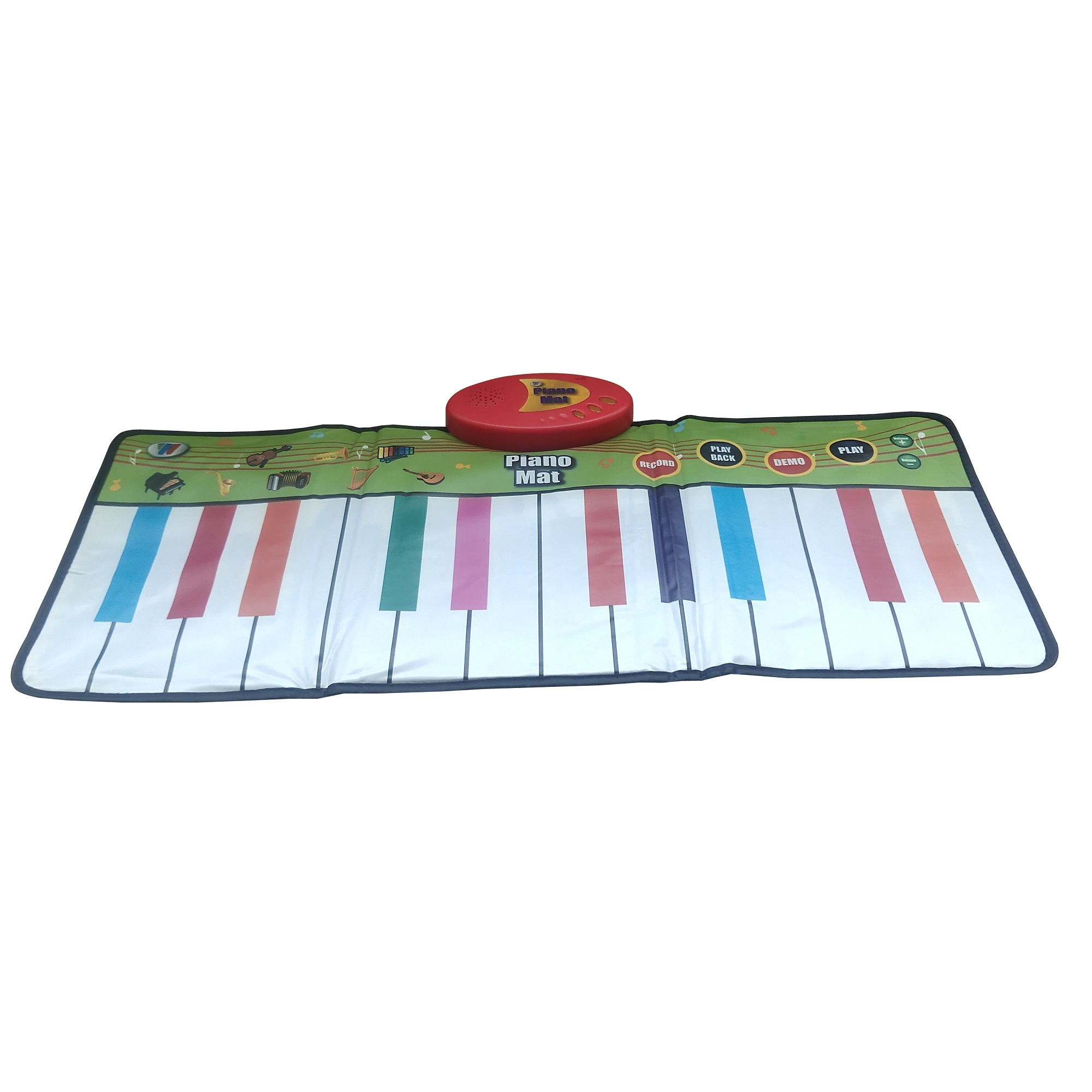
Evaluating the market reveals vast differences in quality. Selecting the right option requires looking past bright packaging to assess functional durability and acoustic integrity.
The Risk: Low-quality sensors create a noticeable lag between the physical step and the digital sound. This delay destroys the rhythmic learning loop. If a child steps to a beat but hears the sound a half-second later, they internalize an incorrect rhythmic pattern. Furthermore, muffled or distorted speakers cause auditory fatigue.
What to Look For: Always evaluate polyphony. Polyphony is the ability to play multiple notes simultaneously. If a child jumps with two feet, the mat must register both tones. Seek clear, un-muffled speaker outputs. True educational tools feature adjustable volume controls to protect sensitive young ears.
The Risk: High foot traffic in homes or classrooms leads to rapid wear and tear. Thin plastics tear easily, exposing internal wires. Additionally, non-compliant, cheap plastics present severe chemical risks, off-gassing harmful volatile organic compounds (VOCs) into play spaces.
What to Look For: Strict material safety is non-negotiable. Require non-toxic, BPA-free, and phthalate-free surfaces. Prioritize heavy-duty vinyl or thick EVA foam construction. The backing must feature a texturized, anti-slip layer to prevent dangerous sliding on hardwood floors. Ensure the surface is completely sealed for easy wipe-down sanitization.
You want a tool that grows alongside the child. Assess whether the product offers multiple instrument voices, such as guitar, flute, or percussion sounds. Record and playback features add immense value. A toddler might simply stomp randomly, but a five-year-old can compose, record, and critique their own sequences. This scalability prevents the item from becoming obsolete after a few months.
Feature Component |
Novelty-Grade Toys |
Educational-Grade Tools |
|---|---|---|
Sensor Technology |
Single-touch point, prone to noticeable auditory lag. |
Polyphonic sensors allowing multiple simultaneous inputs. |
Material Build |
Thin, slippery plastic. Tears easily under heavy use. |
Heavy-duty, non-toxic vinyl with thick anti-slip backing. |
Acoustics |
Harsh, fixed volume. Distorted tones. |
Adjustable volume. Accurate, varied instrument voices. |
Maintenance |
Difficult to clean safely without damaging wires. |
Fully sealed, wipe-clean surfaces for quick sanitation. |
Introducing a mini music ensemble playmat transforms isolated exploration into a dynamic group activity. However, educators and parents must structure these sessions to maximize benefits.
Polyphonic technology dramatically shifts the play dynamic. When multiple inputs register at once, a music ensemble playmat supports several children simultaneously. This shifts the focus from solitary exploration to cooperative peer play.
The social-emotional benefits are profound. Children must negotiate shared physical space without colliding. They learn to coordinate their timing, stepping together to create a unified chord. Basic rhythmic collaboration teaches patience and listening skills. One child might keep a steady bass beat while another taps out a treble melody. They experience the foundational concept of teamwork through a highly engaging, physical medium.
The Risk: Continuous loud noise without boundaries quickly leads to sensory overload. Both children and educators can experience dysregulation if the environment becomes too chaotic.
The Mitigation: We highly recommend establishing clear usage parameters from day one. Best practices include:
Implement Volume Boundaries: Always utilize models featuring volume control. Set an appropriate baseline before play begins.
Structure the Sessions: Balance unstructured "free play" with guided activities. Limit free-form noise-making to short, five-minute bursts.
Rhythmic Imitation Games: Play "Simon Says" using sounds and colors. The adult steps on red and blue; the children observe, process, and replicate the pattern.
Designated Cool-Downs: Transition from high-energy stomping to gentle hand-tapping while sitting on the floor to lower the room's energy level.
When reviewing options, buyers often face a choice between budget-friendly impulse buys and premium educational models. Understanding the difference ensures long-term value and safety.
We must transparently differentiate between low-cost novelty items and educational-grade assets. Budget options frequently suffer from rapid battery drain, easily punctured surfaces, and a lack of polyphony. They might entertain a child for a weekend before ending up in a landfill. Conversely, educational-grade mats feature reinforced stitching, accurate pitch rendering, and heavy-duty sensors. Manufacturers build these premium versions for repeated institutional use or daily heavy home engagement. Investing in durability prevents frustration and ensures consistent developmental benefits.
Before confirming any purchase, advise your team or family to verify the following critical details:
Exact Dimensions: Check the measurements carefully. Is the product large enough to accommodate a growing toddler's natural stride?
Battery Compartment Security: Ensure the battery housing is screw-locked. Toddlers must never gain access to loose batteries.
Care Instructions: Verify the surface is explicitly marked as water-resistant and wipe-clean.
Warranty Policies: Look for manufacturers offering clear return policies or warranties, signaling confidence in their build quality.
A thoughtfully selected interactive floor tool proves to be a legitimate, high-ROI educational asset. It successfully leverages a young child's natural instinct to move, bypassing the fine motor frustrations of traditional keyboards. We see clear benefits in gross motor coordination, cognitive mapping, and inclusive sensory regulation.
Your next step requires auditing your current play space. Determine your primary goal. Are you supporting independent solo play at home, or facilitating group collaboration in a classroom? Measure your available floor area and evaluate your shortlists using the stringent safety and responsiveness criteria detailed above. Prioritize anti-slip backing, true polyphony, and non-toxic materials. By shifting your perspective from "buying a toy" to "investing in a movement-based learning tool," you will actively foster a lifelong, joyful relationship with music.
A: Yes, provided they feature a dedicated texturized anti-slip backing. You must place them on hard, flat surfaces like wood or linoleum. Avoid placing them over plush carpets, as the material can bunch up and create a tripping hazard for unsteady toddlers.
A: Most quality models cannot be machine washed due to the sensitive internal wiring and sensors. We recommend gently wiping the surface with a damp cloth. Use a mild, child-safe antibacterial spray. Never submerge the battery compartment in water.
A: Manufacturers primarily target ages 2 to 5 for foundational gross motor music discovery. However, models featuring adjustable volumes and record/playback capabilities easily engage children up to age 7. Older children can tackle more complex sequencing and basic composition tasks.
A: Yes, but only if the specific mat is explicitly designed with polyphonic capabilities. This technology allows multiple simultaneous inputs to sound at once. Additionally, ensure the product is wide enough to safely accommodate shared physical space without collision.