
Please Choose Your Language
Views: 0 Author: Site Editor Publish Time: 2026-08-02 Origin: Site
Family Entertainment Centers (FECs) are rapidly transitioning from legacy arcade cabinets to active, modular floor-based attractions to maximize square footage and user engagement. Traditional wired dance platforms suffer from high maintenance demands. Cable degradation, tripping hazards, and limited placement flexibility plague older setups. Conversely, adopting a Bluetooth Dance Mat system introduces new operational considerations. Operators must manage signal latency, battery lifecycles, and commercial durability. Successfully integrating a commercial wireless setup requires moving beyond consumer-grade specifications. Venue owners must evaluate structural integrity and RF interference mitigation. This guide provides a technical framework for selecting and deploying wireless dance platforms in high-traffic venues, ensuring you deploy hardware that withstands continuous daily abuse while delivering a seamless guest experience.
Analyzing how a wireless platform allows for modular, reconfigurable venue layouts is the first step in deployment. Wireless systems enable operators to scale the number of active pads based on daily event capacity. You can easily move units for corporate events or weekend tournaments. This flexibility maximizes floor space utilization and adapts to changing crowd dynamics. When you remove the physical tether to a central console, you open up floor plan possibilities that were previously impossible with rigid arcade cabinets.
Eliminating exposed wiring directly reduces liability. Tripping hazards are a major concern in dark, crowded entertainment venues. Removing cables helps facilities maintain strict ADA compliance. It also creates a cleaner, more professional aesthetic for guests. You no longer need to tape down thick data cables or build raised sub-floors just to hide the wiring runs. This simplifies the initial build-out phase of any new attraction zone.
Operators must contrast the maintenance realities of different systems. Replacing severed proprietary cables in legacy systems requires specialized labor and downtime. Managing battery lifecycles and Bluetooth receiver modules in wireless systems presents a different workflow. Staff must adopt daily charging routines rather than performing reactive cable repairs. You trade the physical wear and tear of copper wires for the logistical management of battery packs and RF signals.
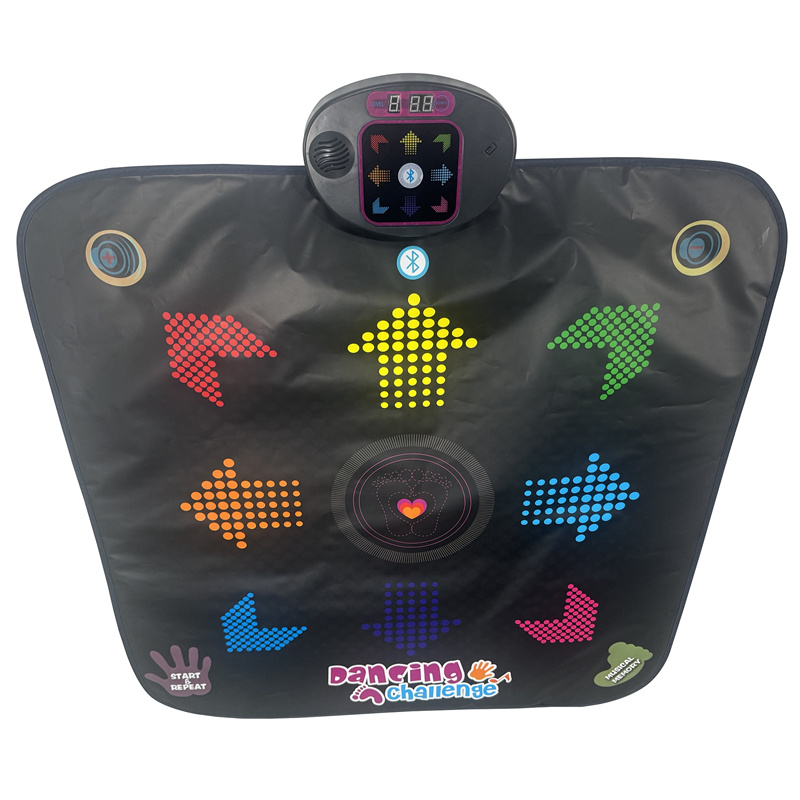
Many operators fall into the "toy" trap when sourcing equipment. Consumer-grade options marketed as a Bluetooth light up dance mat lack necessary polling rates. They also lack the structural integrity and commercial safety certifications required for continuous 12-hour daily operation. These units will quickly shatter or lose sensor accuracy under heavy adult use. A product designed for a living room simply cannot survive the dynamic impact of hundreds of guests wearing heavy footwear.
Material specifications dictate the lifespan of the equipment. You must evaluate sensor types carefully. Industrial optical sensors perform better than pressure-sensitive copper contacts over time. Panel materials must feature shatter-resistant polycarbonate or acrylic rather than cheap PVC. Base construction requires heavy-duty rubberized grip instead of lightweight foam to prevent floor sliding. When a 250-pound adult jumps on an arrow panel, the sub-frame must absorb that kinetic energy without transferring it to the delicate internal circuit boards.
Aesthetic and LED integration also differ wildly. Cheap, static consumer LED elements burn out quickly. Programmable, high-output commercial LED systems sync dynamically with game software. They resist heavy impact and enhance the visual draw of the attraction. Commercial units utilize surface-mounted diodes (SMDs) embedded in shock-absorbing resin, ensuring that a cracked top panel does not immediately destroy the lighting array beneath it.
Software ecosystems determine venue integration. Closed-loop consumer apps offer limited functionality. Commercial software allows for custom track licensing and digital signage integration. It also provides API hooks for venue card-swipe systems to streamline operations. You need software that boots directly into a kiosk mode, preventing guests from accessing the underlying operating system or changing configuration settings.
| Feature | Consumer-Grade Mat | Commercial-Grade Mat |
|---|---|---|
| Sensor Technology | Copper Contact / Membrane | Industrial Optical / Strain Gauge |
| Panel Material | Thin PVC / Foam | Shatter-Resistant Polycarbonate |
| Weight Capacity | Under 200 lbs | 300+ lbs per active panel |
| Ingress Protection | None (IP00) | Spill-Resistant (IP54+) |
| Software Integration | Closed Mobile App | Open API / Card Swipe Ready |
The 2.4GHz congestion problem is severe in entertainment centers. The high volume of guest wearables, Wi-Fi networks, and smartphones impacts Bluetooth signal integrity. This congestion can cause dropped inputs during gameplay. When a guest steps on an arrow, that data packet must cut through the noise of two hundred cell phones searching for a signal. If it fails, the game registers a miss, frustrating the player and damaging the attraction's reputation.
Establishing acceptable latency thresholds is mandatory. Rhythm-based gaming requires sub-15ms polling rates. Input lag ruins the professional-grade play experience. Players will quickly abandon machines that feel unresponsive. You must demand documented polling rate specifications from manufacturers before purchasing. Test these claims in a congested environment, not just an empty warehouse.
Receiver architecture solves many interference issues. Dedicated, high-gain, external Bluetooth receivers are necessary. Position them directly adjacent to the performance area. Do not rely on standard internal PC or console Bluetooth chips, as their range is insufficient. A proper setup uses a USB extension cable to mount the receiver antenna high up on a wall or display truss, maintaining a clear line of sight to the floor units.
Multi-device scalability limits must be analyzed. Wireless bandwidth saturation determines how many active units can run simultaneously. You must ensure a single host computer can handle multiple mats without packet loss or signal crosstalk. Advanced commercial systems use proprietary RF dongles that operate outside standard Bluetooth protocols to guarantee dedicated bandwidth for each player station.
Battery chemistry and capacity dictate operational limits. Evaluating Lithium-ion versus LiFePO4 batteries is necessary for safety. LiFePO4 offers better thermal run-away prevention and longer charge cycles. Continuous runtime must exceed your longest operating shift. You do not want staff swapping batteries at 8 PM on a busy Saturday night. The hardware must run from open to close on a single charge.
Charging infrastructure requires logistical planning. Assessing the requirements of charging multiple mats is critical. Multi-bay rapid-charging docking stations are preferable to plug-in downtime on the venue floor. Staff should be able to pull depleted battery sleds from the mats and drop them into a wall-mounted charger, instantly replacing them with fresh packs.
Hybrid solutions offer an alternative approach. Some mats offer wireless data transmission but utilize a daisy-chained, low-voltage magnetic floor track. This provides continuous power delivery while maintaining modularity. You get the data reliability of a wireless connection without the headache of daily battery management. This is often the best compromise for permanent installations that still want a clean, cable-free aesthetic.
Pairing security prevents unauthorized access. You must prevent guest smartphones from hijacking the active venue mats. Host computer systems must lock Bluetooth channels during operational hours. If a guest can pair their phone to your floor mat, they can disrupt the game or force a system reboot. Commercial hardware disables standard discovery modes once paired to the master console.
Signal recovery protocols keep games running smoothly. The hardware must handle brief signal drops gracefully. A high-quality wireless dance mat automatically re-establishes its secure channel in milliseconds. This happens without manual staff intervention. The software should buffer inputs during micro-disconnects so the player never notices a drop in performance.
Dynamic load ratings differ from static limits. Understanding the dynamic force of adult users jumping repeatedly is crucial. Interactive surfaces must absorb these shocks without cracking. A static rating of 500 pounds means nothing if the panel shatters when a 150-pound person lands hard on their heel. Look for hardware that specifies dynamic impact resistance.
Ingress protection is non-negotiable. Spill-resistant and dust-proof enclosures are required. A minimum IP54 rating ensures the mat survives dropped beverages, sweat, and routine venue cleaning protocols. Soda and slushies will inevitably spill on these units. The internal sensors and battery contacts must be sealed behind rubber gaskets to prevent catastrophic short circuits.
Line-of-sight requirements dictate hardware placement. Follow best practices for mounting receivers and displays. Prevent physical human bodies from blocking the RF path between the mat and the receiver. Mount the antennas at least eight feet off the ground. This ensures the signal travels over the heads of the crowd rather than trying to punch through them.
Audio and visual calibration eliminates perceived desync. Use a step-by-step methodology for syncing wireless input data. Align it perfectly with venue PA systems and large-format displays. Most commercial rhythm software includes a calibration tool. Run this tool daily to account for any processing delay introduced by the venue's video matrix switchers or audio amplifiers.
Software integration requires specific OS compatibility. Set up commercial rhythm game platforms on local servers. Configure drivers properly to handle multi-mat inputs without conflict. Ensure the operating system disables USB power suspension. If the OS puts the Bluetooth receiver to sleep to save power, the connection will drop mid-game.
Anchoring systems secure the equipment safely. Use specific techniques for securing mats to various venue subfloors. Carpet, polished concrete, and industrial epoxy require different non-damaging anchors. High-friction rubber base pads work well on hard floors, but carpeted areas may require hook-and-loop fastening strips to prevent the units from migrating during intense gameplay.
Edge transitions prevent injuries. Install beveled, high-visibility borders around the play area. ADA-compliant borders prevent edge-stepping injuries and facilitate wheelchair accessibility. These borders should be bolted to the floor, creating a secure perimeter that locks the wireless mats in place while providing a safe ramp for foot traffic.
Cleaning protocols protect the hardware. Use safe chemical applications for sanitizing interactive surfaces. Avoid harsh chemicals that degrade polycarbonate panels or short out edge sensors. Ammonia-based glass cleaners will cause acrylic panels to become brittle and crack over time. Stick to pH-neutral, alcohol-free sanitizing wipes.
Diagnostic workflows empower your staff. Venue staff must run rapid daily polling tests. Identify dead zones or failing Bluetooth modules before the venue doors open to the public. Create a simple checklist for the opening crew. They should step on every panel of every mat to verify the software registers the input instantly.
Deploying a commercial wireless setup requires strict attention to hardware specifications and RF environment management. You must prioritize durability, signal integrity, and battery logistics over initial aesthetic appeal. By selecting industrial-grade components and implementing rigorous daily maintenance routines, you ensure the attraction remains profitable and safe for guests.
A: Yes, provided the manufacturer utilizes distinct Bluetooth channel pairing, frequency-hopping spread spectrum (FHSS) technology, or proprietary RF dongles for each mat to prevent cross-talk.
A: For rhythm-based gaming, input latency must remain below 15-20 milliseconds. Anything higher will result in unregistered steps, poor user scores, and a subpar user experience.
A: Commercial units typically feature high-capacity batteries designed to last 10-14 hours on a single charge. LED brightness and pattern complexity are the primary battery drain factors; commercial software can often limit brightness to preserve runtime.
A: Yes, but the integration occurs at the PC/console software level rather than the mat itself. The game software running the system must support API integration with industry-standard systems like Embed or Intercard.
A: Yes, higher-end commercial systems support standard DMX controller integration or custom SDK configurations, allowing the mat's LEDs to sync with both the game rhythm and the venue's ambient lighting networks.
A: Use non-abrasive, alcohol-free sanitizing wipes or lightly damp microfiber cloths. Avoid pooling liquids or harsh solvents that can cloud acrylic panels or seep into internal sensor housings.
A: True commercial pads are rated for dynamic loads exceeding 300 lbs per active panel, utilizing reinforced steel or aluminum sub-frames rather than the foam or hollow plastic found in consumer versions.