
Please Choose Your Language
Views: 0 Author: Site Editor Publish Time: 2026-05-25 Origin: Site
Modern parents face a frustrating daily battle. You want your children to engage in healthy, physical activity. Kids, on the other hand, naturally gravitate toward digital screens and video games. This familiar struggle only intensifies during rainy days or long winter months when outdoor play becomes impossible. A light-up dance mat frequently emerges as a potential bridge between these competing desires. It promises to blend the fast-paced stimulation of digital arcade gaming with genuine physical exertion.
However, you might rightfully wonder if these glowing floor pads actually deliver lasting value. Are they durable tools for daily activity, or just passing novelties destined for the closet? This guide provides a hype-free, objective evaluation of these popular indoor toys. We will explore underlying material quality, concrete developmental benefits, and common manufacturing pitfalls. By the end, you will understand exactly what separates a frustrating, slippery toy from a reliable long-term investment in your child's physical health.
Primary Value: They effectively convert passive screen time into "sneaky fitness" and cardiovascular exertion.
Crucial Differentiator: Anti-slip bases and material quality are the deciding factors between a frustrating, sliding toy and a functional activity mat.
Longevity Driver: Models equipped with Wireless Bluetooth drastically outlast those with only pre-programmed tracks by allowing custom playlists.
Best Use Case: High-energy indoor activity for ages 3–12, requiring minimal storage space.
Children rarely exercise simply for the sake of improving their health. You have to disguise the physical effort as pure entertainment. An interactive floor pad excels at providing this covert cardiovascular workout. We often call this concept "sneaky fitness." Chasing rapid light patterns across a grid demands constant, rigorous movement. It effectively masks vigorous aerobic exercise as a competitive arcade game. Players sweat, elevate their heart rates, and burn off pent-up energy without ever feeling like they are doing a chore.
Beyond burning calories, this activity aggressively drives cognitive and motor development. It serves as a highly effective sensory learning tool. Players must coordinate their eyes, hands, and feet simultaneously. They map rapid visual cues to immediate physical responses. This process strengthens neural pathways related to spatial awareness. Furthermore, stepping to a beat forces children to internalize rhythm. They learn how to align their bodily movements to external auditory signals, which improves overall physical coordination.
These devices also implicitly teach a valuable growth mindset. Most systems feature progressive difficulty settings. You will typically find around five distinct challenge levels. This structured escalation encourages psychological perseverance. Kids experience low-stakes failure when they miss a step on a harder setting. The system immediately provides an opportunity to try again. They adapt their timing, improve their reaction speed, and eventually conquer the difficult stage. This cycle builds confidence and shows them how persistent practice yields tangible success.
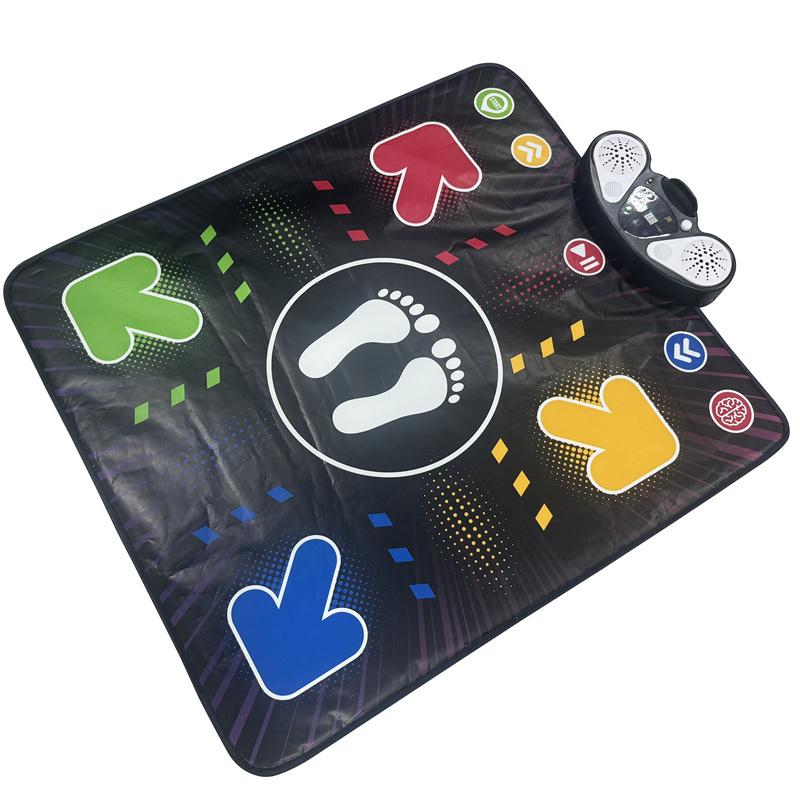
Pre-programmed audio presents a significant longevity risk. Basic models often feature built-in nursery rhymes or generic, repetitive music loops. These limited tracks cause rapid user fatigue. Kids easily outgrow basic tunes, leading to a steep drop-off in daily usage. You should always prioritize units featuring Bluetooth connectivity. This crucial feature lets you stream custom music directly from a smartphone or tablet. It keeps the core gameplay highly relevant. As your child's musical tastes mature over the years, the device adapts seamlessly to their favorite new songs.
You must carefully evaluate the top layer of the pad. We strongly recommend wipe-clean PVC surfaces. They offer an ideal balance of comfort and resilience. The material must remain soft enough to support barefoot play. Playing barefoot significantly improves a child's traction and protects the internal electronics. However, the top layer must also withstand aggressive stomping. It requires high tensile strength to prevent immediate tearing, scuffing, or puncturing from daily use.
Touch-sensitive, zero-delay sensors define the entire user experience. Input accuracy is absolutely non-negotiable. A noticeable lag instantly ruins the illusion of the game. If the operating system hesitates between a physical foot strike and registering the score, children become deeply frustrated. You need a device that responds the exact millisecond a foot lands on the glowing indicator. High-quality polling rates ensure the game feels fair, precise, and rewarding.
Enthusiast parenting forums frequently highlight one major, recurring complaint. Lightweight mats tend to shift dangerously on smooth hardwood floors. This slipping problem causes intense annoyance and presents a genuine safety hazard. Players cannot focus on the game if they constantly worry about sliding across the living room.
You can easily navigate this by evaluating specific mitigation strategies before buying. Always seek out models explicitly featuring heavily textured anti-slip bases. Do not trust smooth bottom layers. You can also employ simple DIY fixes for older units. Placing a standard rubber yoga mat underneath the toy adds immense stability. It prevents sliding while simultaneously providing excellent noise reduction. Your downstairs neighbors will certainly appreciate the muffled stomping sounds.
You must also watch out for the dreaded "plastic bag" feel. Ultra-budget models often suffer from abysmal manufacturing standards. The printed top layer separates entirely from the bottom sensor layer. They slide against each other during active use. It feels exactly like stepping on a loose plastic grocery bag over a hard floor. This internal friction severely hinders gameplay and guarantees the product will tear within weeks.
Finally, consider power and storage constraints before purchasing a dance mat with lights. Most standard units still rely on disposable AA batteries. High-volume usage drains these quickly. Some modern iterations now offer convenient USB rechargeable options. Additionally, foldable designs represent an absolute necessity. You want a flexible device that easily rolls up or slides completely flat under a bed or behind a sofa once playtime concludes.
We must objectively assess the true financial worth of these toys. Let us establish some basic price anchoring. The standard price point for a reliable light up dance mat usually hovers between $25 and $50. Now, compare this upfront cost to common indoor activity alternatives. Modern video game consoles cost hundreds of dollars, plus the ongoing cost of new games. Monthly indoor gymnastics or dance classes demand steep, recurring tuition fees. Bulky indoor trampolines eat up massive amounts of floor space and budget. In comparison, the financial barrier to entry here remains remarkably low.
To determine true value, we must look at the replayability return on investment (ROI). Consider the "cost-per-use" metric. Let us say you purchase an affordable unit for $35. Your kids utilize it for daily 15-minute energy-burning sessions. Over a single month, your cost per use drops to slightly over one dollar. Over six months, it costs mere pennies per session. It acts as a highly accessible, daily fitness tool that pays for itself rapidly in saved sanity.
Furthermore, do not ignore the immense social and family utility. These floor pads serve as fantastic shared activities. Parents can easily step on and compete directly with their children. The core gameplay loop scales beautifully across completely different age groups. It transforms a typically solitary, isolating screen-time habit into an interactive, loud, and joyous family party game.
Selecting the correct model depends entirely on the primary user. You must match the device's complexity to your child's specific developmental stage. Buying a mat that is too simple bores older kids, while a highly complex layout overwhelms toddlers.
When dealing with younger children (Ages 3-6), you should focus heavily on thematic engagement. Look for familiar animal themes, farm sounds, or dinosaur aesthetics. At this age, extreme physical durability matters far more than competitive scoring. You want a thick, resilient surface that handles erratic jumping.
Older children (Ages 7-12) demand much greater complexity. You must prioritize Bluetooth integration for this demographic. They need multi-level competitive modes to stay engaged. Seek out complex 6-button or 8-button layouts that challenge their fast-twitch reflexes.
Here is a detailed comparison chart to help you instantly qualify any kids music dance mat you browse online:
Age Bracket |
Primary Focus |
Essential Tech Features |
Recommended Pad Layout |
|---|---|---|---|
Ages 3-6 |
Durability & Sensory Play |
Built-in animal sounds, simple volume buttons |
4-button basic directional layout |
Ages 7-12 |
Competition & Replayability |
Bluetooth pairing, LED digital scoring |
6-button complex diagonal layout |
Beyond age considerations, run every potential purchase through a strict must-have feature checklist. If a product lacks these elements, move on to another brand:
Adjustable volume control: You absolutely need the ability to lower the music level to preserve your household's peace and quiet.
Multiple game modes: Insist on at least three to five distinct gameplay variations (such as memory modes or speed trials) to prevent repetitive boredom.
Certified safe materials: Verify the product uses non-toxic, lead-free PVC components, especially since kids often play barefoot.
Indoor activity toys must consistently justify the valuable floor space they consume. Based on our comprehensive evaluation, these glowing activity pads offer tremendous long-term value for burning off indoor energy. They successfully disguise rigorous cardiovascular exercise as an addictive arcade game. However, this success relies entirely on your ability to avoid ultra-cheap, poorly constructed models. A premium unit featuring a textured anti-slip base and customizable Bluetooth audio guarantees your family will enjoy it for years to come.
Before you finalize any purchase, take a few immediate, practical steps. Grab a physical tape measure and check the exact dimensions of your open living room floor. Confirm whether your chosen model constantly drains AA batteries or provides a sustainable USB charging cable. Finally, double-check the product specifications to ensure it supports modern wireless streaming. Completing these simple checks ensures you invest in a durable fitness tool rather than a disposable novelty.
A: They are typically best suited for children aged 3 to 12 years old. Most high-quality models feature scalable difficulty levels. This allows the core gameplay to match your child's developing motor skills perfectly. Younger toddlers can enjoy basic, slow-paced light-chasing modes, while older kids can tackle much faster, rhythm-based competitive challenges.
A: Playing barefoot or wearing grippy athletic socks is highly recommended. Hard rubber shoe soles can easily scratch the top PVC surface or permanently damage the delicate internal pressure sensors. Barefoot play also improves necessary tactile feedback and gives kids much better natural traction during fast-paced movements.
A: It depends entirely on your specific carpet style. Low-pile or tightly woven carpets often provide excellent natural grip and stability. However, thick, fluffy, or plush carpets usually cause significant problems. They sink under pressure, which may hinder sensor accuracy and cause the thin mat to bunch up dangerously underneath the user's feet.